 By
By Nurses have to interact with the patients daily, so effective communication becomes vital to understand and take care of the patients. Managing teams, working with colleagues, and handling critical emergencies make communication a highly valuable and essential skill to have, and every nursing professional should work on it for better output and performance.
I, as a nursing practitioner working in the field for over 7 years, can tell you one thing about it: THE BETTER YOU COMMUNICATE, THE EASIER IT’LL BE TO HANDLE PATIENTS. I understood the significance the hard way. In my early professional career as an FNP, I was a bit hesitant or confused sometimes (I was not good at communication as I should have been, I admit).
Gradually, I understood that I had to work hard for it (which I did). I took courses, seminars, read about it online, and even attended interactive sessions as well, so, overall, if you are new to nursing, just a student, or trying to figure out about it, bookmark this post, because this will save you hours of wandering around finding out about the topic. Believe me!
Importance of Communication Skills in Nursing
- Poor nursing communication leads to approximately around 24% of the safety incidents of the patients. From treatment delays to medical errors. (Source: Respiratory Therapy)
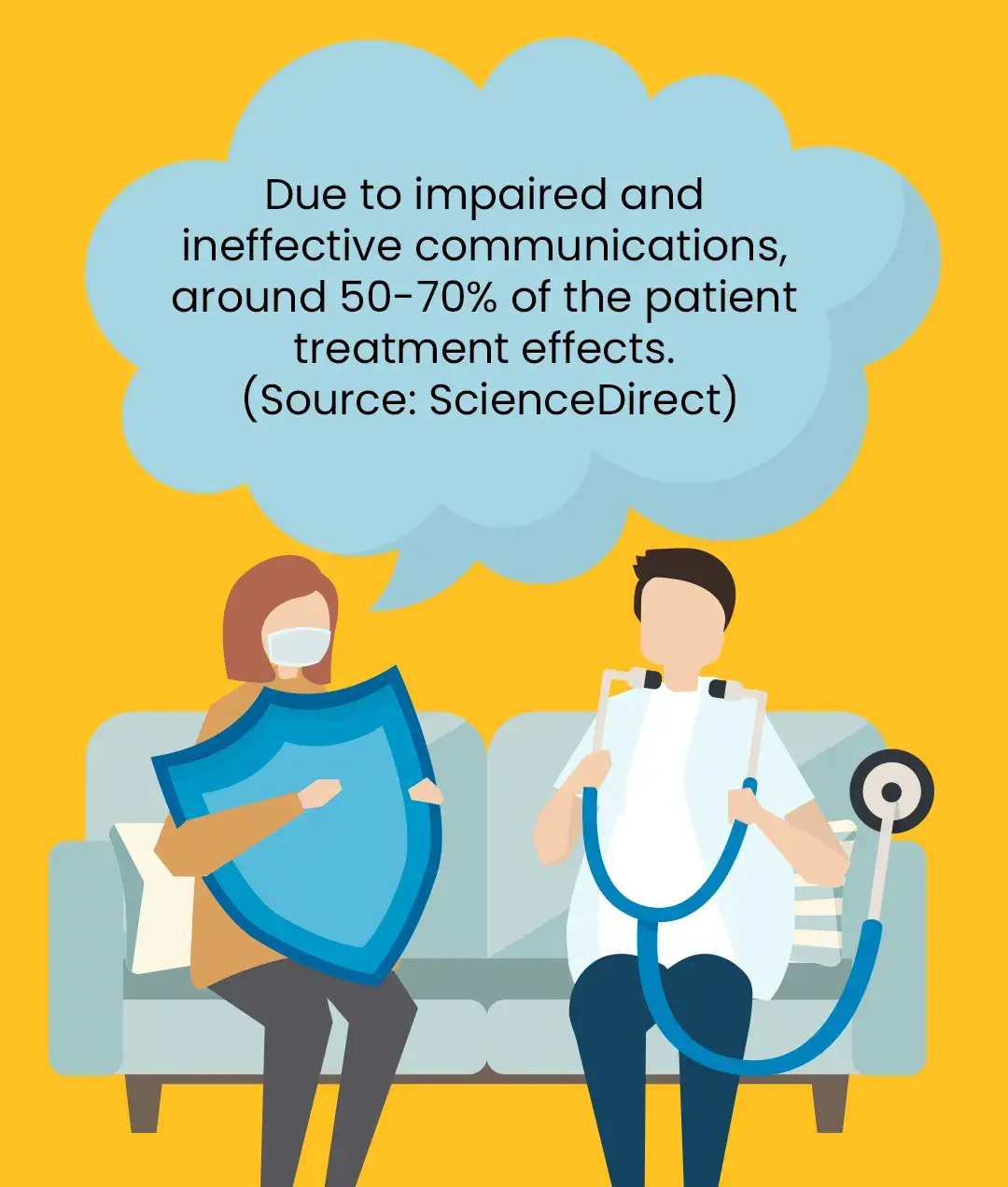
- Due to impaired and ineffective communications, around 50-70% of the patient treatment effects. (Source: ScienceDirect)
- More than 50% of the patients have reportedly faced poor communication. (Source: Patients-associationUK)
This answers the question of why communication skills are important in nursing. The list of stats is not just that; I can go on and on about it, but this sums up all.
Good communication is the key to evaluating, understanding, and preparing better for future circumstances related to the patient, from adding accurate patient history to understanding the concerns and preparing for them.
Another thing that makes communication in nursing vital is patient comfort. If the customer successfully establishes a good dialogue and feels comfortable communicating with the patient, then they have a better chance to talk about the symptoms and everything about their illness with more depth and detail.
Types of Communication Skills Important in Nursing
There are different types of communication skills in nursing that one should possess, such as:
1. Verbal Communication
Speaking with clarity and in a more friendly way is crucial in nursing, especially in adult and child care nursing. The nurse should cater to the patient according to their age, their understanding level, and their health condition. Keep your tone low and calm, with a small smile on your face, which gives easy and good energy to the patients. Use these simple tips:
- Communicate with a clear question like “Can you please tell me about it in detail?”, add more soft words like please in your conversation, as it’s human psychology that gives the signal that you aren’t dominating and asking with a request. Psychology in nursing is another thing that holds immense significance in the field.
- DO NOT use technical language that the patient will not be able to understand.
- Try to convey everything in simple language to avoid confusion or misunderstandings.
2. Non-Verbal Communication
Actions are more impactful than words, and that is why you have to be careful about your body language, posture, hand movements, facial expressions, voice tone, and gestures. This is what makes a difference between just formal talk and making the patient or their family feel comfortable with the nurse. Some points that you should keep in mind as a nurse are:
- Nodding your head with eye contact while they address you with a smile is an example of good non-verbal communication.
- Talk with the patient while looking at them and sit down if you can and lean a bit forward, this shows you are completely engaged with them.
- Try to be more gentle, polite, and easy to interact with, using your facial expressions. Even if you are frustrated or exhausted, you have to present a good positive energy.
3. Writing Communication
As a nurse, you should have excellent writing skills, from creating an incredible patient care plan to nurse-to-nurse communication, as it holds a vital spot in the nursing profession. Keeping track of everything in a professional and clear manner with perfection. You can make notes, mention accurate dates and times that will help you with follow-ups, and have a clear understanding of the true state of the patient and what should be done accordingly.
4. Presentation
This is another highly valuable skill to have to present everything in an organised manner with proper instructions, procedures, the treatments done and what things are required further. Presentation skills are showcased when a nurse has to hand over the patient to another nurse. This skill is not just bound to the professional boundaries but also in the academic journey. Some helpful tips for your nursing academic presentation are:
- Add eye-appealing visuals.
- Know your audience, their level of understanding, and convey the information accordingly.
- Understand what the ideal strategy to present and educate the audience is.
- Don’t just show what to do, present how to do it, or what the best possible solutions are.
Don’t have the time to create a phenomenal presentation? Let us do that
We help students with every type of nursing academic tasks, including research papers, thesis, and creating impactful and flawless presentations as well. Trusted by thousands across the country.

5. Active Listening
I’m a good listener, and that made it really easy for me to understand their experiences. This is the skill you should definitely master. Pay attention to every detail the patient is describing. Do not interrupt while the patient is talking, but you should maintain eye contact with some verbal communication like “I totally understand” This tells the patients that they are being listened to, and this is a crucial thing in most cases, usually in mental health nurses or with adult nurses, to understand the situation better.
6. Trust Building
It’s the responsibility of the nurses to take every concern, question or information seriously, as this shows that they are being taken care of. I handled many patients who were first really scared of the environment. I then talked to them and ensured their safety and security with a calm and easy discussion. He opened up about his fear of certain treatments, but upon convincing him with a small but rather easy discussion.
Nurses have to spend days, weeks, and sometimes even months with a patient, and that is why they should have a great bond of trust and communication for better and quicker output and for a smooth experience.
7. Patient Education
The counselling of patients and their education is another very crucial communication skill to have. It is amongst the roles of nurses to educate and inform the patient and their family about the current situation, future possibilities, diagnoses, and treatment plans. Medical protocols, procedures, and their complexities. Knowing how to deliver it efficiently. This boosts the understanding of the patient or their families about the situation and encourages them about the treatment.
When I had to educate the patient or their families, I usually asked a simple question like ” Did you get what we just discussed, or can you repeat what we went through now? Alternatively, can you tell me what you understand about what we just discussed?
The response of the patient and their families will show you the true understanding of the matter.
Conclusion
Good communication skills are crucial in nursing, as they can directly affect the patient in many ways, and nursing professionals should work on their verbal, non-verbal, writing, presentation, active listening and patient education to enhance the output and better performance.
FAQs
Q 1. What are the challenges to overcome for better communication in nursing?
Ans: Language and cultural differences, low self-confidence, poor understanding and knowledge of the field, lack of interest, and fatigue. Nursing students or professionals should overcome these challenges to improve their communication.
Q 2. How to take nursing communication skills into practice?
Ans: If you are a student, you should participate in communication skills activities, interactive sessions, verbal and non-verbal practices and if you are a professional, then you should try to communicate with the patient more and understand them more in every aspect.
Q 3. How to Improve Nursing Skills in nursing?
Ans: If you are good at talking and listening, then it would be easier for you; otherwise you have to do exercises and spend time to get it better. Online courses, classes or sessions will definitely improve it.
Q 4. What are the effects of poor communication in nursing?
Ans: Poor communication skills in nursing can lead to medical record errors, unclear symptom reasons, wrong treatment plans and mishandling of the patient. All of these can cause serious trouble.
Q 5. How to find out about my communication strengths and weaknesses?
Ans: If you are good at socialising and expressing yourself and don’t hesitate around people, especially strangers, and know how to talk in a certain situation, how to properly and professionally interact, then you have good communication skills. Otherwise, you have to spend time working on these skills to be a better nurse.
Q 6. How crucial is communication in nursing?
Ans: The more comfortable patients feel, the more they explain better, and not just that, from recording illness, to understanding the situation and future treatment, it is really crucial to have good communication skills as a nurse.
Q 7. Why nursing students should start working on their communication?
Ans: As a professional nurse you should have good communication skills, as the hospitals evaluate the performance of the nurses with it. Plus, to treat the patients better, you have to understand them better, and for that, you should have good communication skills.
Q 8. What are the five basic communication skills?
Ans: 5 basic communication skills are verbal, non-verbal, active listening, adaptability and emotional intelligence. All of them play a big role in shaping someone to be excellent at communicating.