 By
By A reflective nursing essay is a significant element of nursing education that enables students to examine their experiences and study them to learn. In contrast to traditional academic writing, reflection dwells on personal experience, emotions, and professional development. It assists nursing students in linking theory with practical clinical activities.
The idea of reflective writing in nursing is commonplace and is used to enhance critical thinking and decision-making. It helps students to analyze their practices, comprehend situations with patients, and determine what can be improved. Reflective essays are assigned to students in many universities as part of their coursework or as part of a clinical examination.
The reflective models applied in order to lead this process include Gibbs’ Reflective Cycle and Kolb’s Learning Cycle. These models offer a systematic method of analyzing experiences and drawing valuable conclusions.
What is a Reflective Nursing Essay?
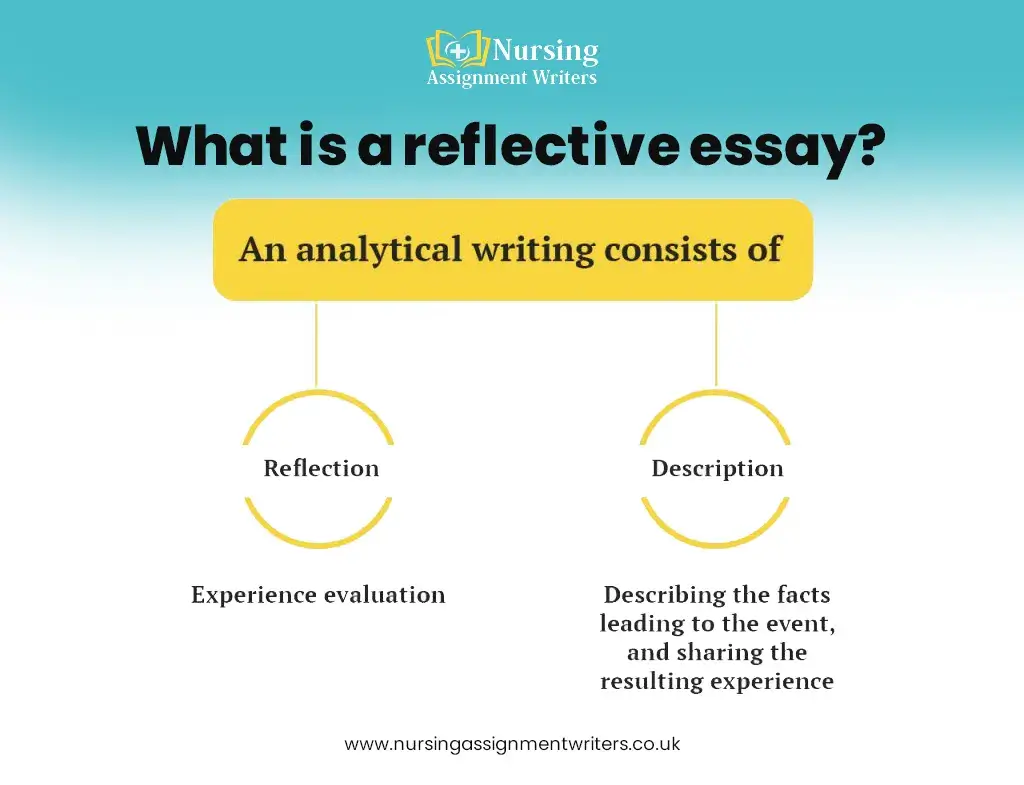
A reflective nursing essay is a kind of academic paper in which students reflect on their clinical experiences to enhance their knowledge and skills. It includes explaining a scenario, cogitating (thinking deeply), appraising the consequences, and outlining learning lessons.
A reflective essay in nursing not only describes what transpired but also examines the reasons why it transpired, as well as how it can be used to enhance future practice. This kind of writing is mostly applied in both academic and clinical writing.
A nursing reflective essay is more analytical and personal as opposed to a general essay. Where traditional essays give attention to facts and arguments, reflective essays emphasize experience, self-knowledge, and career growth. It is due to this that reflection becomes a key instrument for lifelong learning in nursing.
Importance of Reflective Writing in Nursing
Reflective writing is a practice that is essential in producing quality healthcare professionals in the field of nursing. It gives students a chance to reflect on their behavior and experience real-life examples.
One of the primary advantages is that it improves clinical competence. Through reflection on interactions with patients and care decisions, students will be able to see what worked well and what requires improvement. This will result in improved patient outcomes in the long term.
Constant learning is also supported by reflection. The field of nursing is a dynamic one, and professionals need to keep pace with new knowledge and practices. Reflective writing will help students keep pace and enhance their knowledge.
Another valuable advantage is learning to think critically. Students do not just follow instructions, but learn to analyze and make informed decisions. This is critical to patient care.
Lastly, reflective practice also leads to evidence-based nursing. Connecting experience and theory enables students to use research-based knowledge in actual clinical practice.
Therefore, in this guide, you will learn how to write a reflective nursing essay.
Common Reflective Models Used in Nursing
A structured model can be used to write a good reflection. These models take students through the process and make reflection lucid and purposeful.
Gibbs Reflective Cycle
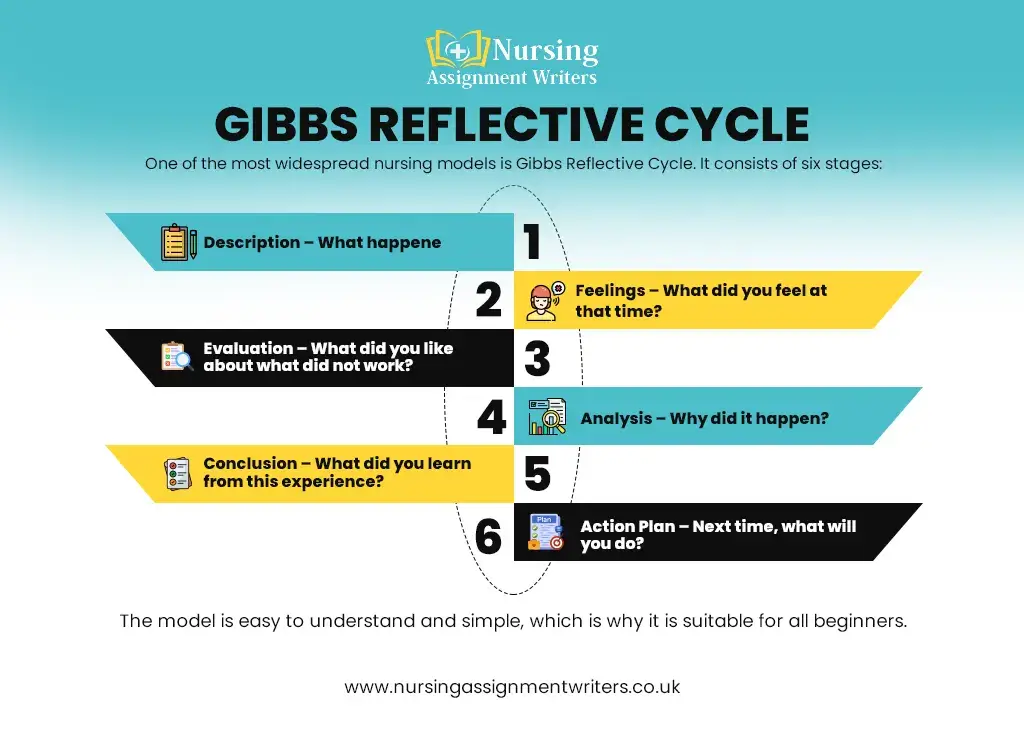
One of the most widespread nursing models is Gibbs’ Reflective Cycle. It consists of six stages:
- Description – What happened?
- Feelings – What did you feel at that time?
- Evaluation – What did you like and what did not work?
- Analysis – Why did it happen?
- Conclusion – What did you learn from this experience?
- Action Plan – Next time, what will you do?
The model is easy to understand and simple, which is why it is suitable for beginners.
Kolb’s Learning Cycle
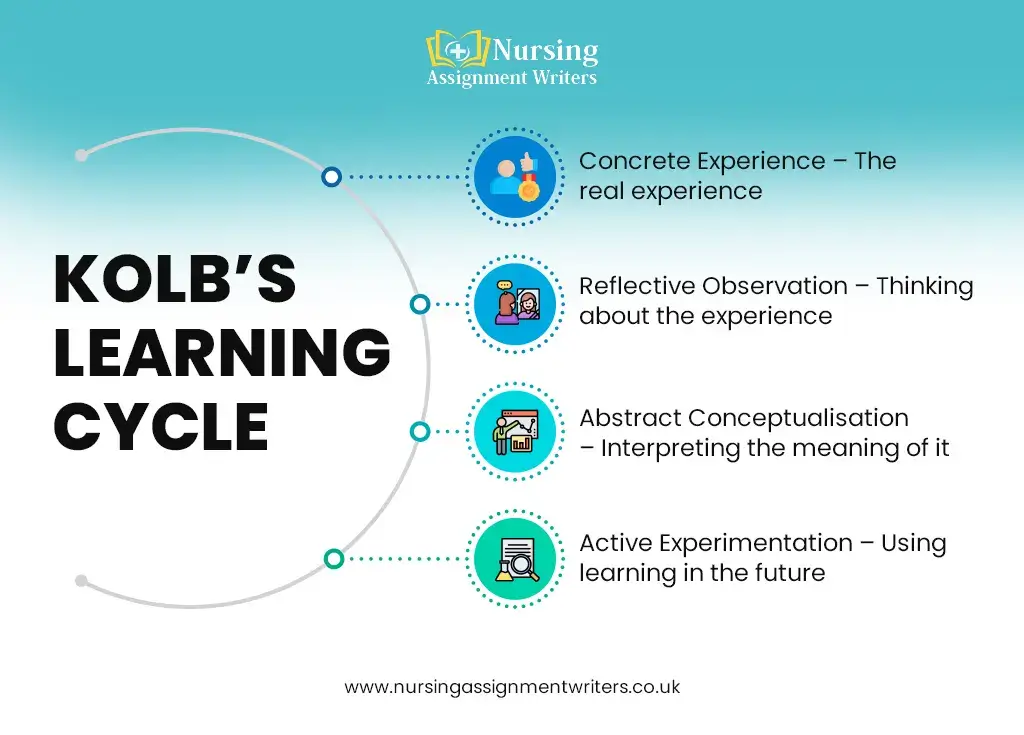
Another popular model applied in reflective writing is the Learning Cycle created by Kolb. It includes four stages:
- Concrete Experience – The real experience
- Reflective Observation – Thinking about the experience
- Abstract Conceptualization – Interpreting the meaning of it
- Active Experimentation – Using learning in the future
This model emphasizes experiential learning and is applicable in the acquisition of practical skills.
Driscoll Model
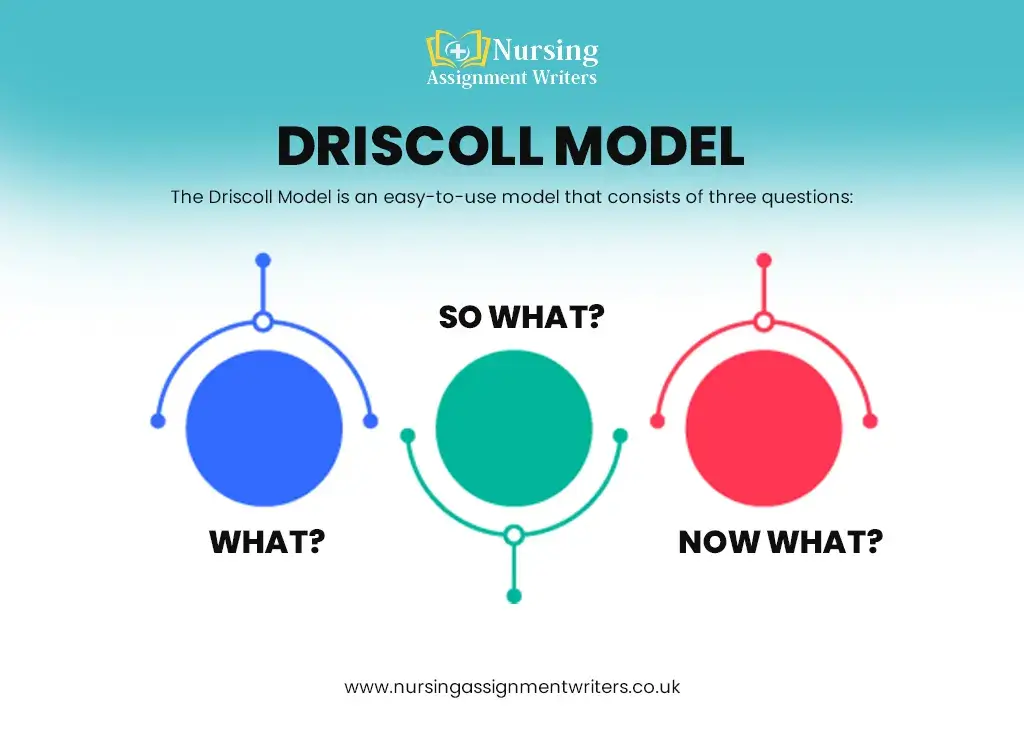
The Driscoll Model is an easy-to-use framework that consists of three questions:
- What?
- So what?
- Now what?
This model can be applied by students who are unfamiliar with reflection and prefer a simple method of evaluating their experiences.
These models are critical in learning how to write a reflection in nursing effectively because they provide structure and clarity.
How to Write a Reflective Nursing Essay in 7 Steps
A reflective nursing essay may seem difficult to write initially, yet a step-by-step approach makes the process much easier.
Step 1: Choose an Experience
Begin by choosing a significant experience from your clinical placement. This may be patient care, collaboration, or a problematic situation. Make sure you choose an experience that had a genuine impact on your learning.
Step 2: Describe the Situation
Give a definite and brief description of the event. Include major points like what, where, and who was involved. Avoid unnecessary details and stick to the core points.
Step 3: Express Feelings
Consider the feelings and thoughts you had during the experience. Did you feel sure, anxious, or uncertain? This is a significant step since it demonstrates personal engagement with the situation.
Step 4: Evaluate the Experience
Evaluate successes and failures—there are two sides to every coin. This helps you recognize your strengths and weaknesses.
Step 5: Analyse the Situation
This is the most important element of reflection. Connect your experience with theories and concepts of nursing. Describe how things should have been handled and what you would do differently. This is where you think deeper to bridge practice and knowledge.
Step 6: Conclusion
Conclude on what you have learned during the experience. Point out major lessons that will benefit your future practice.
Step 7: Action Plan
Discuss how you will use this knowledge in the future. This may involve enhancing communication skills, learning new information, or altering your attitude toward patient treatment.
Structure of a Reflective Nursing Essay
A reflective essay needs to be organized and clear to succeed academically. Knowing the structure also helps you organize your thoughts effectively.
Introduction
The introduction must give a general idea of the aim of your reflection. It should include:
- A brief account of the experience.
- The reflective model you are using.
- The aim of the essay.
Make it brief yet enlightening so the reader knows what to expect.
Main Body
The most valuable section of a nursing reflective essay is the main body. It includes:
- Narration of the experience.
- Individual feelings and responses.
- Evaluation of the situation.
- Theoretical analysis.
This part must have a logical flow, particularly when employing a model like Gibbs or Kolb. Ensure you strike the right balance between description and analysis. Most students focus too much on what happened rather than what they learned.
Conclusion
The conclusion sums up your reflection and includes key learning outcomes. It should not introduce new information, but rather emphasize what you learned and how it will affect your future practice.
Nursing Essay Conclusion Examples
The significance of writing a solid conclusion is that it leaves a strong final impression.
Example 1 (Short):
“The experience helped me work on my communication skills and realize the relevance of patient-centered care. Therefore, I will ensure I apply these important skills in the future.”
Example 2 (Analytical):
“This experience highlighted the significance of teamwork and effective communication while caring for patients. Through reflection, I discovered areas for improvement, specifically in managing patient anxiety, which ultimately boosted my confidence for future clinical settings.”
Reflection Essay Example Nursing (Mini Sample)
Sample Reflective Paragraph (Gibbs’ Cycle Application):
During a recent clinical placement, I cared for an elderly patient diagnosed with dementia who became highly distressed prior to receiving an intravenous cannula. I initially felt overwhelmed and anxious because the ward was understaffed and time was pressing. Evaluating the situation, I realised that rushing the procedure only escalated the patient’s fear. Analysing this through Benner’s novice-to-expert model and person-centred care theory, I understood that emotional reassurance must precede technical execution. I concluded that patience and active listening are just as vital as clinical efficiency. Action plan: In future similar scenarios, I will allocate extra time for verbal de-escalation before introducing clinical equipment.
Full-Length Reflective Essay Sample (Gibbs’ Cycle)
To see how all these theoretical stages come together in a real-world assignment, you can review and download our complete Full-Length Reflective Essay Sample (Gibbs’ Cycle) to use as a structural guide for your own writing.
Nursing Reflection Ideas (Topic Suggestions)
A key element in writing a meaningful reflection is selecting the right topic. Consider these good nursing reflection ideas:
- Initial clinical placement experience
- Dealing with a stubborn or challenging patient
- Interaction with patients and families
- Professional dilemmas in medicine
- Clinical teamwork and collaboration
- Managing a medication error
- Managing stress in clinical practice
Tips for Writing a High-Quality Nursing Essay
- Be Honest and Personal: Since this is your experience, be sincere. Focus on actual learning rather than trying to impress with complex filler.
- Use Academic References: Demonstrate your analysis with pertinent nursing theories and studies to reinforce your arguments.
- Maintain Confidentiality: Always safeguard patient identity by keeping names and identifiable information out of your essay.
- Follow a Structured Model: Apply models like Gibbs or Kolb to structure your thinking and cover critical points.
- Proofread Carefully: Check grammar, spelling, and clarity before submission.
Struggling to Structure Your Clinical Experience? Get Expert Nursing Reflective Essay Help Today!
Turning clinical experiences into a high-scoring academic paper can be challenging. Let our professional BSN and MSN writers provide reliable nursing reflective essay help with original analysis, proper frameworks, and affordable pricing.

Common Mistakes to Avoid
- Being Too Descriptive: Placing too much emphasis on storytelling rather than critical analysis.
- Ignoring Reflective Models: Failing to use a model, which can render your essay disorganizied and incoherent.
- Lack of Structure: Submitting poorly organized text without clear headings or logical flow.
- Breaching Confidentiality: Disclosing patient information, which is a grave ethical concern.
- Weak Conclusion: Writing a final paragraph that fails to summarize learning or future actions.
Final Words
Reflective writing is an essential tool in nursing education and practice. It enables students to learn from experience, enhance clinical skills, and think critically.
A reflective nursing essay is never merely an account of events, but rather an interpretation of those events, their effects, and the transfer of knowledge into future practice. With the assistance of structured models like Gibbs or Kolb, students can organize their ideas and produce meaningful reflections, ultimately building professional confidence and facilitating lifelong learning.
FAQs
Can I use “I” in a reflective nursing essay?
Yes, reflective writing uniquely permits and actively demands the use of first-person pronouns (“I”, “my”) because it is fundamentally built upon personal experience, self-awareness, and individual professional development.
What is a reflective nursing essay?
A reflective nursing essay is an academic paper in which students examine their clinical experiences to enhance their knowledge, skills, and professional practice.
How to write a nursing reflection?
To write a nursing reflection, choose a significant clinical experience, use a systematic framework (such as Gibbs’ or Kolb’s model), describe the event, express your feelings, critically analyze it through nursing theory, and outline a future action plan.
What are good nursing reflection ideas?
Strong topics include initial clinical placement experiences, interacting with challenging patients, handling communication breakdowns, resolving ethical dilemmas, participating in teamwork, or managing a medication error and clinical stress.
What should be included in a nursing essay conclusion?
A nursing essay conclusion must provide a concise summary of your core learning points and clearly articulate how you will apply those lessons to improve your future clinical practice.
Why is reflective writing important in nursing?
Reflective writing aids in professional development, builds critical thinking, improves clinical competence, and bridges the gap between abstract academic theory and hands-on patient care.
Which reflective model is best for nursing essays?
Gibbs’ Reflective Cycle is widely considered the best and most popular model for nursing essays due to its straightforward six-stage structure, which guides students smoothly from emotional processing to deep analysis and action planning.