 By
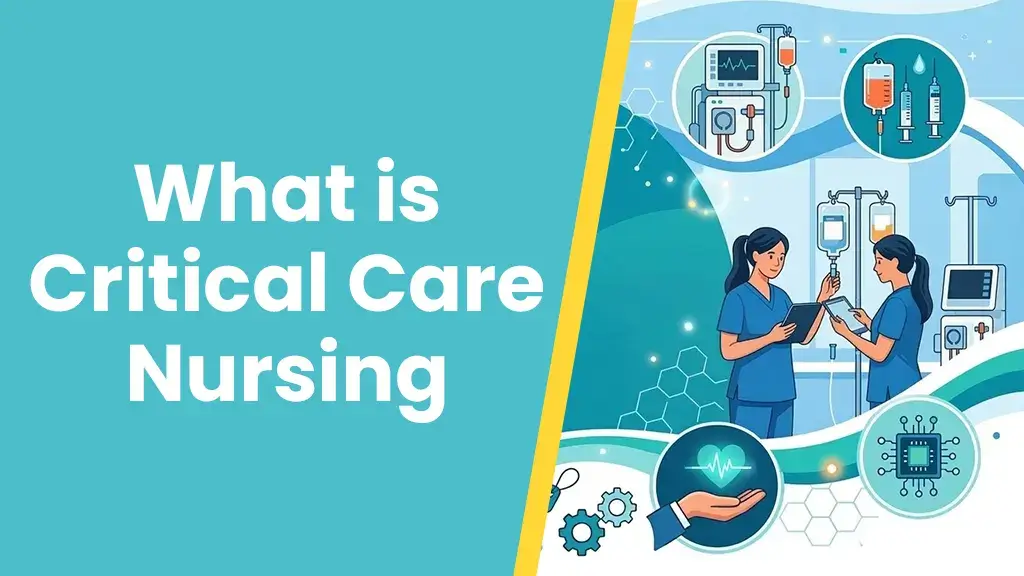
By Critical care nursing is one of the most demanding yet rewarding areas in healthcare. Nurses working in this field usually care for patients who are seriously ill or facing life-threatening conditions.
Their work demands high-order clinical expertise, prompt decision-making, and emotional stability. In modern hospitals, critical care units operate twenty-four hours a day to monitor patients and address emergencies.
What is critical care nursing? This is a question many students and professionals would ask themselves. Moreover, they wonder why saving lives is so important. With the rise of complex diseases and advanced medical technology, the demand for skilled ICU nurses in the UK is growing.
Many hospitals rely on these specialists to provide constant monitoring, rapid treatment, and compassionate support for patients and their families.
What is Critical Care Nursing?
Understanding what critical care nursing is starts with knowing about the basic definition. Furthermore, it is a specialised area of nursing that is focused on caring for patients with life-threatening illnesses or severe injuries who require constant observation and advanced medical support.
Also, it is different from general nursing. Instead, professionals in critical care units manage unstable patients whose conditions can change within minutes. They also usually work in ICUs, high-dependency units, and emergency departments.
Patients in these units may be recovering from major surgery, trauma, heart attacks, severe infections or respiratory failure. Continuous monitoring and quick intervention are crucial for survival.
What Does a Critical Care Nurse Do?
The question most people ask themselves is: What does a critical care nurse do in a normal shift?
- Their main task will be to monitor critically ill patients and keep their vital signs stable.
- They use life support devices, including ventilators, infusion pumps, and cardiac monitors. These devices assist in preserving respiration, circulation, and organ function.
- The critical care nurses also administer medications, assist the doctors in emergency cases, and record all changes in the patient’s status.
- Moreover, they can talk to families, discuss treatment plans, and offer emotional support in stressful circumstances.
Intensive Care Nursing Explained
Critical care practice goes hand in hand with intensive care nursing. It focuses on the treatment of patients in an ICU, where a complex array of monitoring systems and specialised equipment is used.
In intensive care units, nurses typically care for one or two patients in a given unit. This is because the patient-to-nurse ratio is low, thus requiring close observation and quick response to complications.
ICU care has a number of specializations that are cardiac intensive care, neonatal intensive care, and trauma intensive care unit.
Essential Critical Care Nursing Skills
Strong critical care nursing skills are necessary for handling complex medical situations. Nurses must be confident in
- Ventilator management
- ECG monitoring
- Intravenous therapy
- Rapid emergency response.
Additionally, nurses also need technical abilities to use advanced medical devices and interpret laboratory results accurately. In fact, soft skills are crucial too, like:
- Clear Communication
- Emotional Resilience
- Teamwork
- Quick Decision-making
This helps nurses perform effectively under pressure.
ICU Nursing Skills Every Nurse Must Have
Having strong ICU nursing skills allows nurses to handle unpredictable situations in critical units.
Additionally, the ICU nurse’s skills include:
- Critical thinking
- Time management
- Infection control
- Crisis management
Also, accurate documentation is very crucial because every observation can influence treatment decisions.
How to Become a Critical Care Nurse in the UK?
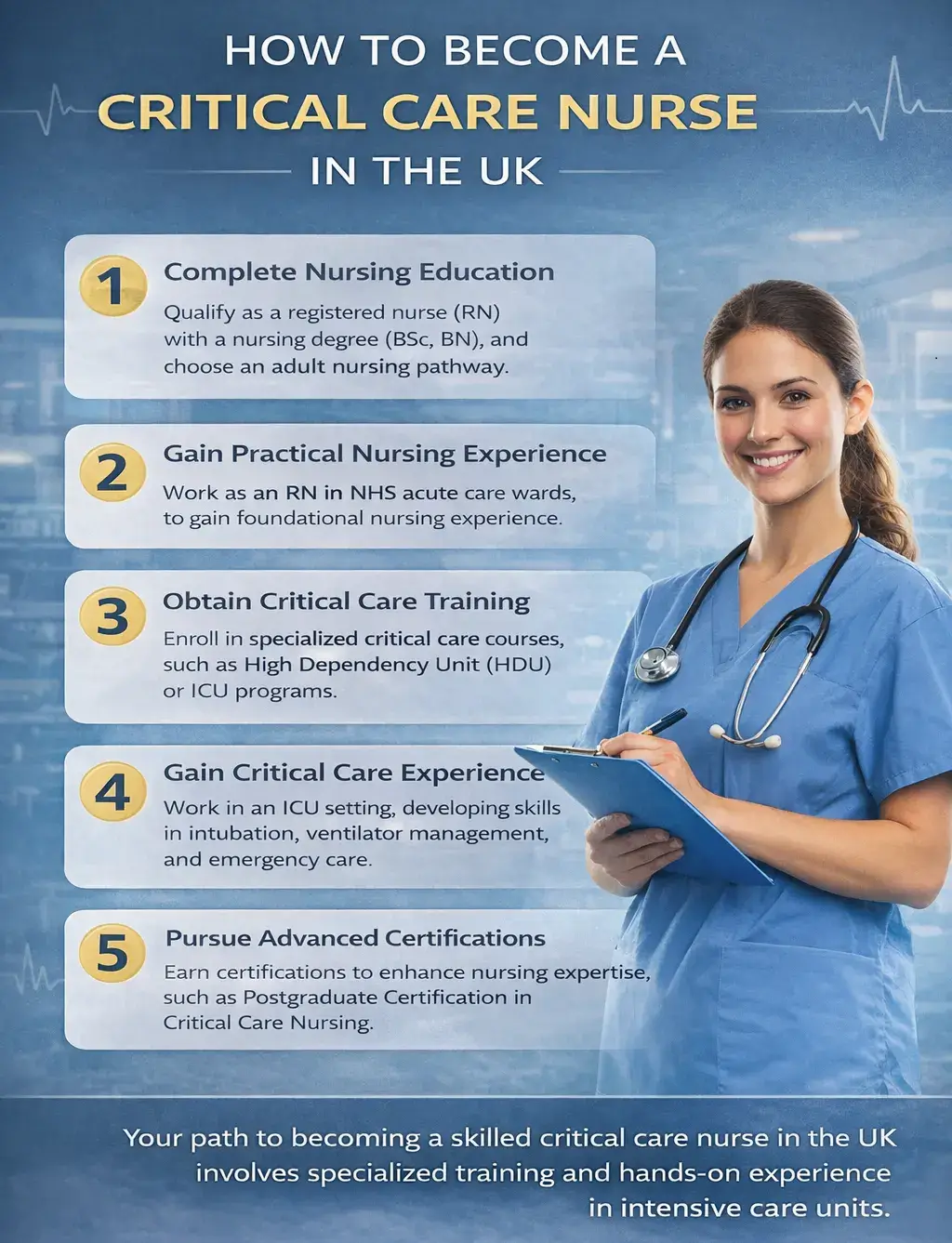
The UK is one of the countries where a career in critical care nursing can be difficult and satisfying. Critical care nurses deal with patients who need constant attention and specialised medical care. Due to the complexity of this position, nurses need to take the necessary education and clinical experience and acquire specialised ICU skills.
1. Complete a Nursing Degree
The initial process towards becoming a critical care nurse in the UK is attaining a degree in registered nursing. A Bachelor of Science in Nursing (BSc Nursing) or an alternative approved nursing degree from a recognized university is normally taken up by students.
Among other important areas, the nursing students are taught:
- Anatomy and physiology.
- Care of the patient and practice.
- Medication safety and pharmacology.
- Infection control and prevention.
- Ethics and politeness in healthcare.
Clinical placements in hospitals are also incorporated in most nursing programs and are used to provide a practical experience for students under the supervision of professionals. These placements enable them to gain awareness of the real healthcare settings, and they are ready to specialise in the future.
A Pro Tip: Studying a nursing degree can be challenging, especially if you have to work on critical care essays, Gibbs reflective papers, and much more. In that case, you can always connect with Msn nursing writing services.
2. Register with the Nursing and Midwifery Council (NMC)
The graduates have to be registered by the Nursing and Midwifery Council (NMC) in order to legally work as nurses in the UK after graduation with their nursing degree.
The registration procedure with the NMC normally includes:
- Providing evidence on nursing qualification.
- Satisfying the English language requirements.
- Passing health and character checks.
- Finding the necessary registration fee.
After registration, nurses are allowed to work in hospitals, clinics, or other healthcare institutions within the UK.
3. Gain Clinical Experience
The majority of nurses acquire general clinical experience in hospital wards before retiring into intensive care:
- Medical wards
- Surgical units
- Emergency departments
- Cardiac or respiratory units.
The experienced doctors assist nurses to acquire fundamental patient care skills, management time, and confidence to manage medical situations. Most hospitals do not allow nurses to shift to ICU without having a year or two of clinical practice.
4. Complete Critical Care/ICU Training
Once the experience is gained, nurses will be able to get a job in the ICU and pass the course of specialised training. Newly hired nurses in ICU are usually given in-house training on critical care.
There are also those nurses who prefer to undertake the postgraduate courses in critical care nursing that may include:
- PG certificates in critical care.
- Diplomas in intensive care nursing.
- Professional clinical practice courses.
Such programs are aimed at the modern monitoring of patients, ventilator work, emergency intervention and the work with the specific medical equipment.
5. Develop Advanced ICU Skills
Critical care is a career that needs lifelong learning and development. The ICU nurses continuously refresh their skills in the following areas:
- Management of ventilator and respiratory support.
- Cardiopulmonary monitoring and interpretation of the ECG.
- Emergency life support operations.
- Intricate administration of medicine.
- Critical environment infection control.
Training of such skills enables the nurses to offer quality care to the critically ill patients in a safe manner.
6. Pay and Professional Development
The salaries paid to critical care nurses in the UK depend on experience, qualification and the working environment. Majority of the ICU nurses are under the NHS Band salary scheme in which remunerations are determined by experience and duties.
Having some extra training and experience, nurses may advance to the following positions:
- Senior ICU nurse
- Nurse specialist critical care.
- Nurse educator/clinical trainer.
- ICU ward manager or leader
Other professionals advance to an advanced practice/research position, which facilitates the enhancement of critical care services.
7. Ongoing Professional Improvement
The nursing of critical care is a fast-changing profession. Nurses need to keep on learning to uphold high levels of patient care during their careers.
Professional development could be:
- Workshops and medical conferences.
- Getting a higher qualification.
- Being a part of hospital training programs.
Researching new methods and technologies of treatment. Life-long learning enables nurses to remain abreast with the new medical practices and enhance patient outcomes in the ICU.
Struggling with your Critical Care Nursing Assignments?
Critical Care assignments require proper understanding and critical thinking. However, many students struggle to incorporate theory into practice. If you are having any troubles, consider seeking guidance from the Nursing Assignment Writers in the UK.

Why Choose a Career in Critical Care Nursing?
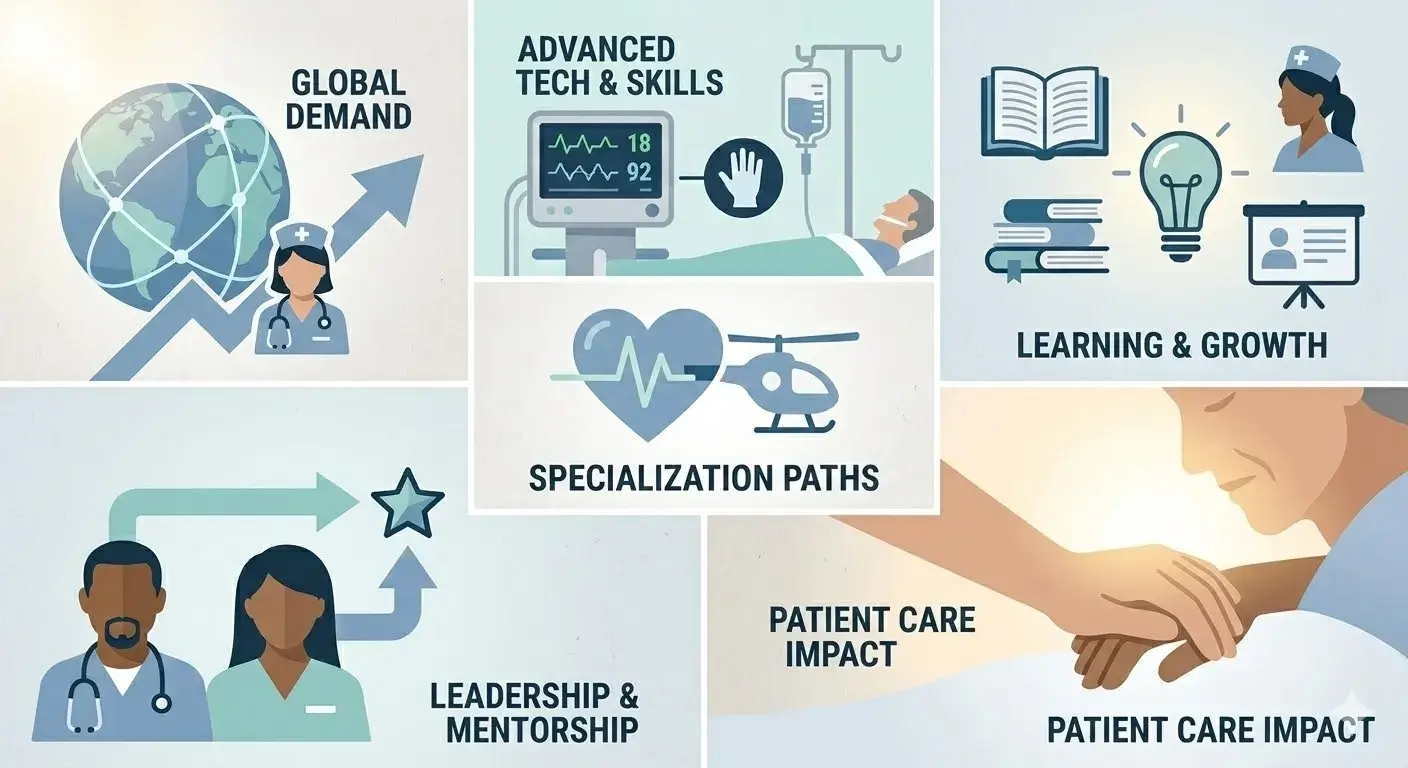
Critical care nursing is a profession that has numerous advantages both professional and personal. It is a very esteemed discipline in which nurses have a crucial role of saving lives and assisting patients to go through the worst health situations.
- Global demand of ICU nurses: As the number of complicated diseases and aging people rise, more trained ICU nurses are needed in hospitals. This demand generates good job security and job opportunities in the UK and other countries of the world.
- Specialization and higher training: Critical care nurses have a variety of areas to specialise in cardiac ICU, neonatal ICU, trauma care, or respiratory care. Other aviation courses and graduate programs are also offered in various healthcare facilities to enable nurses to improve their knowledge.
- Significant positive impact on the severely ill patients: ICU registered nurses collaborate with critically ill patients that require life-saving therapeutic interventions and 24-hour supervision. Their fast judgement, clinical ability, and understanding care can make a big difference in patient outcomes and recovery.
- Ongoing education: The area of critical care is perpetually changing with the introduction of new technologies, treatments and medical studies. The nurses in this region undertake regular training, workshops and skills development programs to keep up with the current healthcare practice.
- Career advancement and leadership: Nurses have an opportunity to advance their career to senior positions, including ICU nurse specialist, clinical educator, or unit manager with experience and supplementary qualifications. These roles enable professionals to mentor other nurses and train new nurses, as well as make improvements in healthcare.
All in all, critical care nursing is an exciting and dynamic career option due to the opportunities of lifelong learning, specialization, and making a difference to the patients. Explore the core nursing skills that can boost your career.
Challenges of Critical Care Nursing
Critical care nursing may be a physically and emotionally exhausting profession. ICU nurses have to operate under extreme pressure conditions, as they must attend to the critically ill patients around-the-clock. The job can be tricky due to long working hours, medical cases which are complex, and having to make quick decisions. Nevertheless, with proper support and training, a significant number of nurses are able to tackle those challenges and keep providing quality care.
- Long shifts: The nurses in the critical care department routinely have long shifts, night shifts, and weekend shifts.
- Emotional stress: It may be emotionally challenging to take care of seriously-ill patients and even encounter the loss of patients.
- High responsibility: Nurses should pay strict attention to the patient and react to any fluctuations in their state.
- Intrusive workload: More complex equipment and several healthcare activities may add pressure to work during heavy shifts.
They face these challenges but work well as a team, receive the necessary training, and are supported by healthy working conditions inside the healthcare settings, which enable nurses to overcome stress and deliver their services effectively.
Conclusion
This is a wrap. Understanding critical care nursing is crucial to succeed in this field. Critical care nurses are specialists with high-level medical education, technical background, and empathy, who treat the most vulnerable patients.
Critical care nursing is a challenging yet very significant career for aspiring healthcare professionals. When educated, trained, and dedicated, nurses can create a rewarding future and, at the same time, contribute to patient survival and recovery.
FAQs
Q1. What is critical care nursing?
Ans: Critical care nursing is the specialised practice of caring for patients with life threatening conditions who require continuous monitoring and advanced medical support in units such as the ICU.
Q2. What does a critical care nurse do daily?
Ans:A critical care nurse monitors vital signs, manages life support equipment, administers medications, assists in emergency procedures, and communicates with doctors and families.
Q3. What skills are required for ICU nursing?
Ans:Important skills include critical thinking, ventilator management, infection control, communication, teamwork, and rapid clinical decision making.
Q4. How do I become a critical care nurse in the UK?
Ans:You need a nursing degree, registration with the Nursing and Midwifery Council, and additional ICU training or clinical experience.
Q5. Is critical care nursing stressful?
Ans:Yes, the profession can be stressful because nurses deal with emergencies, long shifts, and critically ill patients.
Q6. What is the difference between intensive care nursing and critical care nursing?
Ans: Both terms are often used interchangeably, but intensive care nursing typically refers to working in the ICU.
Q7. Is critical care the same as ICU?
Ans: Critical care includes several high dependency areas, while the ICU is a specific hospital unit where the most severely ill patients receive treatment.