
 By
By Making a career change can be daunting, particularly if you are switching to a challenging career such as nursing. Many people are finding success in making the transition over to a new career each year; however, the job stability, fulfilment, and endless growth opportunities of nursing. It is actually regarded as one of the most common career changes for nurses or people who come from totally different professions. Nurses aren’t just educated people anymore; businessmen, customer service representatives, and even technology professionals are opting to follow a nursing career because they want to have an impact on lives.
Making the transition to a nursing career can be difficult at first, but with planning and perseverance, it can become much easier. Nursing can offer you many opportunities for the future, whether you are interested in increased job security, greater earning potential or a more rewarding career.
Here we will explore six steps for career changes for nurses profession.
Why go for a Nursing Career Change?
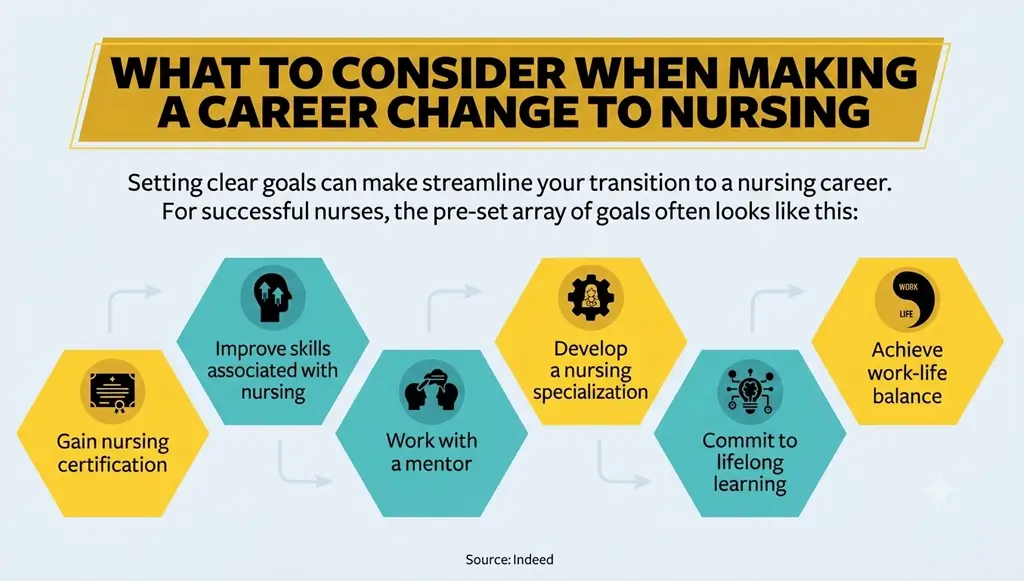
There are many professionals who have a certain stage in their careers where they are no longer happy with their work. Some are feeling burnt out, others are looking for more meaning and stability. A career change after Nursing is a good option here.
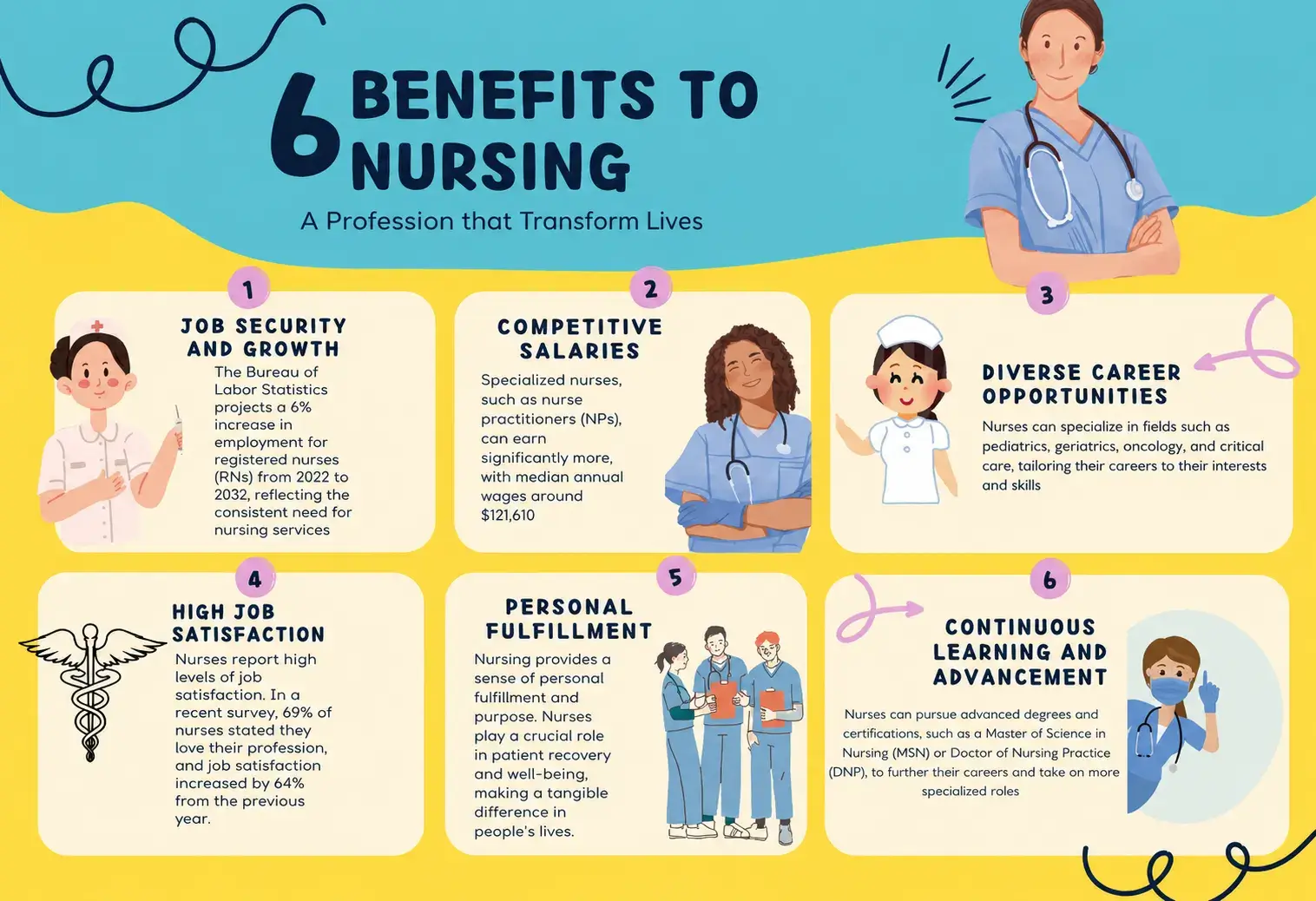
There are several advantages to nursing, such as:
- Strong job demand
- Flexible work schedules
- Career growth opportunities
- Emotional fulfillment
- Competitive salaries
- Diverse specialisation options
One of the things about nursing is that, compared to other professions, it can be a way for you to help others during hard times in their lives. We will see more most common and best career change for nurses.
Steps to Make Career Changes for Nurses
Around 35% of nurses think about the career change while practicing. The following are the key steps of Career Change for a Nurse:
Step 1: Understand Why You Want to Become a Nurse
Before embarking on your career changes for nurses journey, do some soul searching to understand what you’re seeking out in a new career.
Consider the following questions:
- What are the reasons for pursuing a career in the healthcare field?
- Do I feel at ease dealing with patients?
- Am I able to cope with stressful situations?
- Is helping others a pleasure for me?
- Am I ready to learn on a continuous basis?
It’s important that you’re honest with yourself because nursing takes commitment, the ability to be patient, and a strong emotional state. Therefore, these are important factors to consider while career changes for nurses.
Healthcare workers are often mistakenly considered glamorous professions, but they come with physical and emotional stress. Nurses work long hours, have emergencies to deal with and have to deal with emotionally challenging situations. That is why psychology is quite essential in nursing.
But for many, the benefits far outweigh the difficulties.
Research Different Nursing Roles
Nursing is a very general profession with numerous specialities. It’s not necessary to take just one route when career changes for nurses.
The most common nursing jobs are:
- Registered Nurse (RN)
- Licensed Practical Nurse (LPN)
- Nurse Practitioner (NP)
- Pediatric Nurse
- Emergency Room Nurse
- Mental Health Nurse
- ICU Nurse
- Public Health Nurse
Doing research on these options can help you make a decision on which one you are interested in and which one is best for your lifestyle for career changes for nurses.
Step 2: Evaluate Your Existing Skills and Experience
One of the greatest benefits of career changes for nurses is that many of your existing skills may apply to nursing, too.
Individuals in other professions, such as teaching, hospitality, customer service and management, may have transferable skills, including:
- Communication
- Problem-solving
- Leadership
- Teamwork
- Time management
- Critical thinking
These skills are very beneficial in healthcare environments, especially if you are looking for career changes for nurses.
For example:
- The teachers are usually patient in their teaching.
- Customer Service employees have communication skills.
- Managers have an understanding of the nature of management and leadership.
Knowing that you have some skills that can be transferred will help in your confidence-building process.
Develop New Healthcare Skills
While your past experience will be a great help, you must also have medical knowledge and clinical training.
You can start by:
- Taking healthcare-related courses
- Learning medical terminology
- Volunteering at hospitals
- Completing CPR certification
- Shadowing nurses
They’re great experiences to learn what nursing every day entails and will help you in career changes for nurses.
Step 3: Select the Appropriate Nursing Training Program
Education is a key component of a career change for nurses UK. The program that you select will be based on your current level of education, budget, and career aspirations.
There are several typical routes to Nurse Career Change:
Associate Degree in Nursing (ADN)
- Usually takes 2 years
- The early start to the nursing phase.
- More affordable option
Bachelor of Science in Nursing (BSN)
- Usually takes 4 years
- Many hospitals prefer to use this option.
- Provides more job prospects
Accelerated BSN Programs
These programs are geared toward those with a bachelor’s degree in another major.
- Takes 12–24 months
- Intensive and fast-paced
- The course is popular among people who are changing their careers.
One of the quickest ways to enter nursing is through an accelerated program.
Consider Online and Hybrid Learning
A growing number of universities provide part-time, online nurse education with on-site clinical practice to favor career changes for nurses.
This will be useful for the adults who are:
- Working full-time
- Managing families
- Transitioning gradually
However, do note that there is still a need to do clinical practice in health care facilities. As career Change from nursing is quite tough. You can search for the top nursing universities to start with.
Step 4: Gain Clinical Experience and Hands-On Training
Nursing is not the only thing that’s in a book. Experience is a must.
During clinical training, students will be able to:
- Work with patients
- Practice medical procedures
- Develop communication skills
- Understand hospital environments
- Build confidence
Most nursing programs have a clinical rotation that takes place in a hospital, clinic or community health care centre.
Be Ready for Emotional Challenges
One thing many people forget when they are considering a career change to nursing is the emotional component.
You may experience:
- Patient loss
- Stressful emergencies
- Long shifts
- Physical exhaustion
It is crucial to learn healthy coping mechanisms to be successful in the long term.
Some useful techniques for career changes for nurses are:
- Practicing self-care
- Building support systems
- Managing stress effectively
- Maintaining work-life balance
Many nurses find their job to be rewarding and fulfilling, even though it can be difficult.
Step 5: Take the Licensing Exam
Upon graduation from nursing schools, graduates should take an exam to become a licensed nurse. Especially if you are career change from dental nurse:
In many countries, it means:
- NCLEX-RN
- NCLEX-PN
These exams assess your:
- Clinical judgment
- Patient care knowledge
- Safety practices
- Decision-making abilities
Cracking the license exam will demand discipline and regular studying.
There are many career change ideas for nurses, if they want to switch to other careers. Like they can also career change from nurse to teacher or career change from nursing to business.
Study Tricks for Nursing Tests
The following are helpful preparation strategies:
- Creating study schedules
- Taking practice tests
- Joining study groups
- Reviewing nursing fundamentals
- Flashcards and online resources are used.
You are on a major step in your nursing career when you pass your exam.
Worried About Qualifying Your Nursing Exam? Hire Nursing Assignment Writers for Guaranteed Results!
It is time to ace your nursing exams with the help of professional nursing assignment writers ready to assist you throughout your nursing journey.

Step 6: Start Building Your Nursing Career
With a license, you can start to apply for nursing jobs.
A large number of newly qualified nurses begin their careers in:
- Hospitals
- Clinics
- Nursing homes
- Rehabilitation centers
- Community healthcare settings
You might not get to experience your dream job right away, but this experience can help you gain confidence and experience in your first job.
Keep Learning & Growing
The nursing field has a wealth of learning opportunities. As experience accumulates over time, specialise in areas of greatest interest.
Advanced career possibilities are:
- Nurse educator
- Nurse manager
- Nurse practitioner
- Clinical researcher
- Healthcare administrator
In many careers, nursing is not just a job, but a lifetime career journey.
Final Words
One of the most rewarding choices you can ever make is making the transition to nursing, which can seem daunting. Nursing remains one of the most popular career transitions for nurses and professionals from other fields, offering a pathway for those seeking fulfilling careers, professional dcan ever make isevelopment, and job security.
If you know your goals, select the appropriate educational course, gain experience and get ready for your licensing exams, you will be able to make a successful move into the healthcare field. Although it can be difficult to deal with stress, time management, and financial difficulties, the rewards and satisfaction of nursing can make it worth the trip.
From seeking a full transition to nursing to pursuing more career options, nursing offers a pathway that is ever evolving, accessible, and purposeful.
FAQs
1. Is nursing a good career for people changing professions?
Yes, nursing is a popular option for career changers because it provides them with job security, meaningful work, and career growth opportunities.
2. How can you get to be a nurse as quickly as possible after another college degree?
One of the quickest ways to earn a BSN is to enrol in an accelerated BSN program.
3. How long does a nursing career change take?
It will rely on the program selected. The length of time accelerated programs take ranges from 12 to 24 months, and traditional programs may take longer.
4. Do older students find it difficult to nurse?
Older students often excel in nursing because of their maturity, self-control and experiences.
5. What skills do you have that can be applied to nursing?
Nursing is a field that requires a great deal of communication, teamwork, leadership, problem-solving, and time management skills.
6. Is it possible to study nursing part-time while working full-time?
There are, indeed, various universities that will give you a part-time, online or hybrid nursing program, suitable for working adults.
7. What are some potential pitfalls of changing careers in nursing?
Stress factors include financial issues, time management, emotional stress, and adapting to a new school.
8. What is the mean salary of nurses?
The wages of nurses are competitive, depending on the country, specialisation, and experience.