 By
By We all have set goals in our lives. Someone might be aiming to buy a house next year. A student might aim to achieve a distinction in modules. Or your colleague might be hoping to get a promotion this year. Well, setting goals is more crucial than you think. It helps one to understand their own ambitions and aspirations in life.
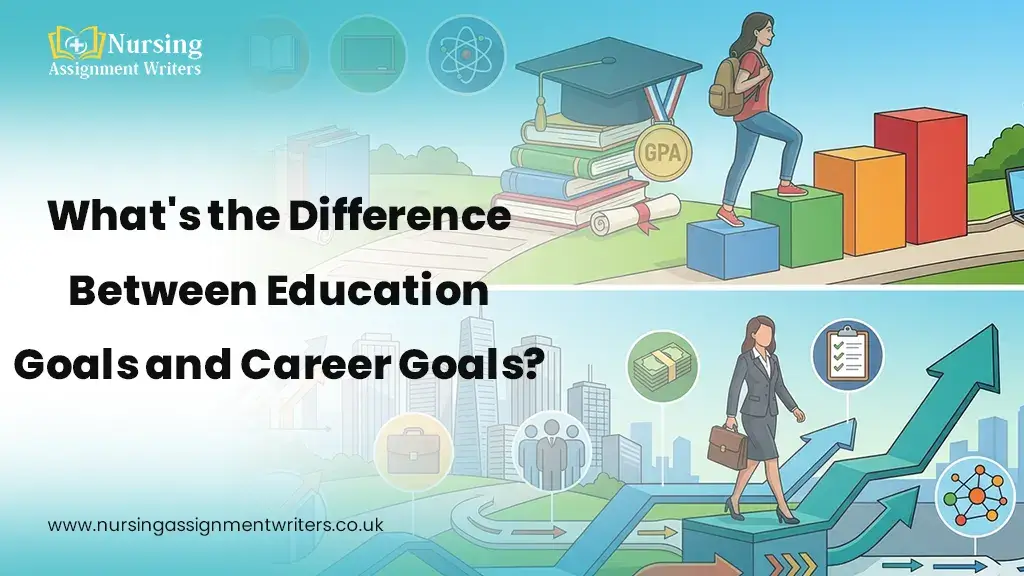
However, here we are going to discuss education goals and career goals. Understanding educational career goals can help students and professionals clearly distinguish between academic ambitions and professional aspirations. Some people are confused between the two and are not aware of their differences. In that regard, this blog will be helpful to you. Moreover, these two types of goals complement each other. Also, both of these must be aligned if you want to live a successful life.
What are Goals and Why are they Significant?
Goals are specific desired outcomes that people want to achieve within a certain timeframe. They serve as a roadmap and turn your wishes into actionable steps. However, a good practice is to set SMART goals. This means they must be Specific, Measurable, Achievable, Relevant, and Time-bound.
- Setting goals means giving yourself a direction and focus to work on your dream.
- Goals give you increased motivation because they create a sense of purpose.
- They also help you to measure your progress, and you can easily identify how far you’ve come.
Let’s discuss education and career goals.
What are Education Goals?
So, let’s understand what education goals are. Any objectives that are related to learning and academia come under the umbrella of education goals. For students, it is a blueprint of what they want to achieve during their academic journey.
Mostly, educational goals are directly linked to academic performance and grades. Let us understand this with an example: My friend got a 3.7 GPA in the first semester. Now, throughout the academic years, she aimed to maintain it. Or someone who aims to get a good score in the exam.
Here are Some Examples of Education Goals
- Achieving a high GPA.
- Completing a bachelor’s degree.
- Earning a master’s qualification.
- Improving writing and communication skills.
- Learning a foreign language.
- Passing a professional certification exam.
- Developing research skills.
- Completing a specific assignment such as a nursing dissertation.
Generally, these goals are short-term or medium-term objectives that help one to build the foundation for future opportunities
For example: a computer science student may set a goal to master programming languages such as Python and Java.
What are Career Goals?
Career goals are professional objectives or aspirations. They motivate an individual to move forward in their profession and aim to be positioned in their dream role. For example, a junior HR intern would always wish to get a permanent position. While a mid-level HR officer aims to secure a promotion with a salary increment. What we think to achieve is what we work hard for. It could be for an increment, promotion, or professional recognition (becoming a LinkedIn star could be one of the goals).
Here are Some Examples of Career Goals
- Becoming a software engineer.
- Working as a university professor.
- Starting a successful business.
- Becoming a marketing manager.
- Having a salary raise.
- Being promoted to senior positions.
- Getting a job in a credible company.
The focus is merely on professional outcomes.
For example: “My goal is to become a surgeon.” It is a career goal and relates to the future profession.
What are the Differences Between Education Goals and Career Goals?
Purpose
Education Goals:
- They focus on knowledge and skills.
- They emphasise academic performance.
- They prepare students for future opportunities.
Career Goals:
- They focus on professional growth.
- They help define long-term work ambitions.
Timeline
Education goals:
- They are usually short-term or medium-term.
- They may take months or years to accomplish but have a specific time period.
Career Goals:
- They are often long-term.
- They can take many years of your professional life and usually do not have a specific time period.
Measurement
Education Goals:
- They are measured through grades, certifications, degrees, and completed courses.
Career Goals
- They are measured through promotions, salary increases, job satisfaction, leadership roles, and professional accomplishments.
Focus Area
Education Goals:
- Learning and development.
Career Goals:
- Employment and professional success.
Educational and Career Goals
Education goals and career goals are both important in their respective positions. They complement each other and a successful student must align both.
How do Education Goals Support Career Goals?
Education goals and career goals are both important in their respective positions. They complement each other and a successful student must align both.
Example 1
If someone’s career goal is to become a medical doctor, then their education goals would be to earn top grades in science subjects, complete a medical degree, and gain clinical training experience.
Example 2
If someone’s career goal is to start a successful business, then the education goals would be to learn business management and study marketing principles, develop financial literacy, and improve leadership skills.
What are Your Educational and Career Goals?
Before aligning your education and career goals, it is important to identify what you want to achieve academically and professionally. Once you have a clear vision, you can create a practical plan to reach your objectives.
How To Align Education and Career Goals?
If you want to align the academic and career goals, then ensure that your academic goals support your career ambitions. Setting clear education career goals can help you create a structured roadmap that connects your learning objectives with your future profession.
1. Define your Career Vision
First, you must identify the profession that intrigues you, and the nature of work and environment you prefer.
2. Research the Requirements
Then research the qualifications needed for the desired profession. Such as degree requirements, certifications, skills, and industry trends.
3. Create the Education Milestones
Then, break your education journey into manageable goals, for example, setting targets to complete specific courses, achieving target grades, learning skills, and so on.
4. Gain Practical Experience
After achieving the education goals, seek internships, part-time jobs, and industry projects, as they can bridge the gap between education and career goals.
5. Fulfill your Career Goal
Once you gain all the relevant experience and qualifications for your career goal, then fulfill your career goal and aim for more professional development.
Both goals are important, as one builds the foundation while the other sets a destination. Also, it is really important as a nurse to continue education to achieve more professional development.
All in all!
Education goals and career goals both are essential, as without career goals, education goals may lack focus, and without education goals, career goals become nearly impossible to achieve.
Think of education goals as the roadmap and career goals as the destination. A student who understands the differences will make better decisions for choosing the pathways and be successful in life.
Therefore, strategically align your education and career goals.
FAQs:
1. What are the four types of goals?
The four primary types of goals in goal-setting are outcome goals, process goals, character goals, and learning goals.
2. What is meant by education goals?
Education goals are plans and objectives related to academic milestones.
3. What are the 7 types of goals?
7 types of goals help balance the major areas of life, categorized by Spiritual, Financial, Career, Intellectual, Health/Wellness, Family, and Social.
4. What are the top 3 career goals?
The top 3 career goals: skill development, professional advancement, and network growth.
5. What is another name for education goals?
Learning objectives, academic goals, or education objectives.
6. What is the SMART goal example in education?
I will practice my spelling words for 15 minutes every night after school so that I can score at least 85% on my spelling test this Friday.
7. What is a career goal?
A career goal is an accomplishment that you are progressing toward in your work.
8. What’s the difference between an education goal and a career goal?
Education goals focus on knowledge, credentials, and skills, whereas career goals focus on employment milestones and professional development.