
 By
By fHow healthcare professionals make decisions is a complex process. Nurses are usually the main people in the middle of these scenarios, as they are the one who spends the most time with patients and family. Whether it’s safeguarding patient privacy or honouring treatment decisions, every decision calls for professional judgment and a solid moral basis. Ethical nursing practice is done when Registered Nurses care safely, with compassion and in a patient-friendly manner and are able to uphold professional standards and legal duties.
Ethics is not just about obeying rules. It’s a matter of doing the right thing, showing respect for human dignity, and making a well-informed decision even in tough times. With new technologies, cultural diversity, and patient needs, along with the ever-changing healthcare landscape, nurses have to balance patient care with their ethical obligations.
This guide will cover the ethics that registered nurses have to observe, and everything that you must know to follow the right ethical protocols.
Understanding Ethical Nursing Practice
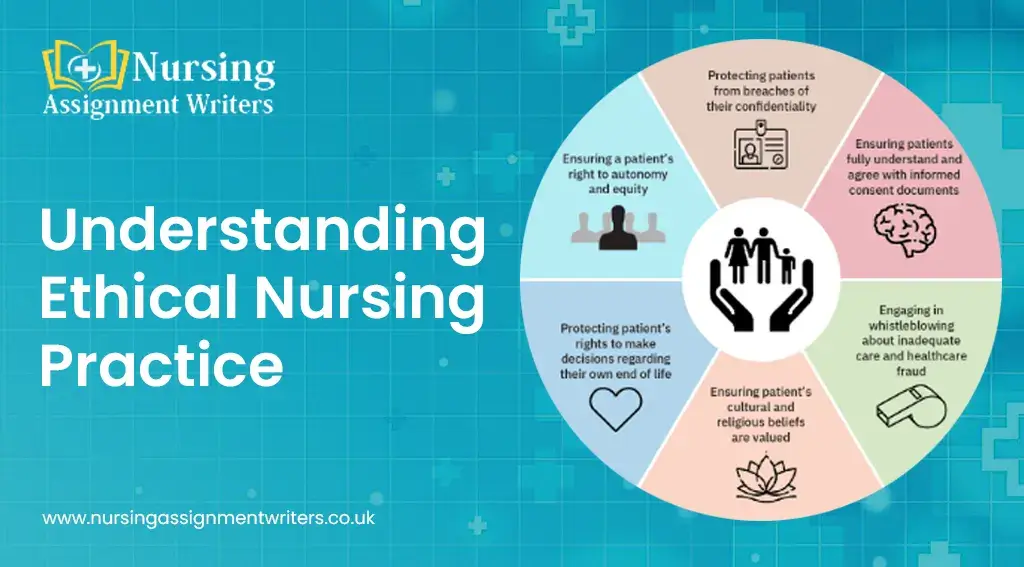
All registered nurses are expected to adhere to professional practice standards, which will ensure the safety of patients and enhance the quality of health care. Ethical nursing practice is the application of caring based on moral values, nursing codes and evidence-based standards.
Ethical nursing is not just a matter of skills, but also of taking into account the emotional, cultural, legal and personal needs of each patient.
These are some of the major job duties:
- Respecting patient autonomy
- Maintaining confidentiality
- Treating everyone fairly and equally
- Taking steps to minimise harm, if possible
- Being honest and accountable
- Promoting patients’ welfare
These duties are involved in every encounter between a nurse and a patient, from the hospital to the clinic, the community to the long-term care facility.
What is Ethical in Nursing?
One of the most common questions posed by students is what is ethical in nursing?
Ethics in nursing is a basic term that, in the simplest terms, refers to making decisions that are morally correct, while remaining within professional standards and respecting the patient’s rights.
Ethical care is concerned with:
- Dignity of a person is respected
- Compassionate communication
- Equity in access to health care services
- Patient safety
- Professional accountability
- Avoidance of dishonesty in obtaining consent.
For instance, when a patient rejects a treatment even though nurses advise it, they need to respect the patient’s right to make decisions and make sure the patient has a complete understanding of the consequences.
Ethical Principles in Nursing Every Registered Nurse Should Know
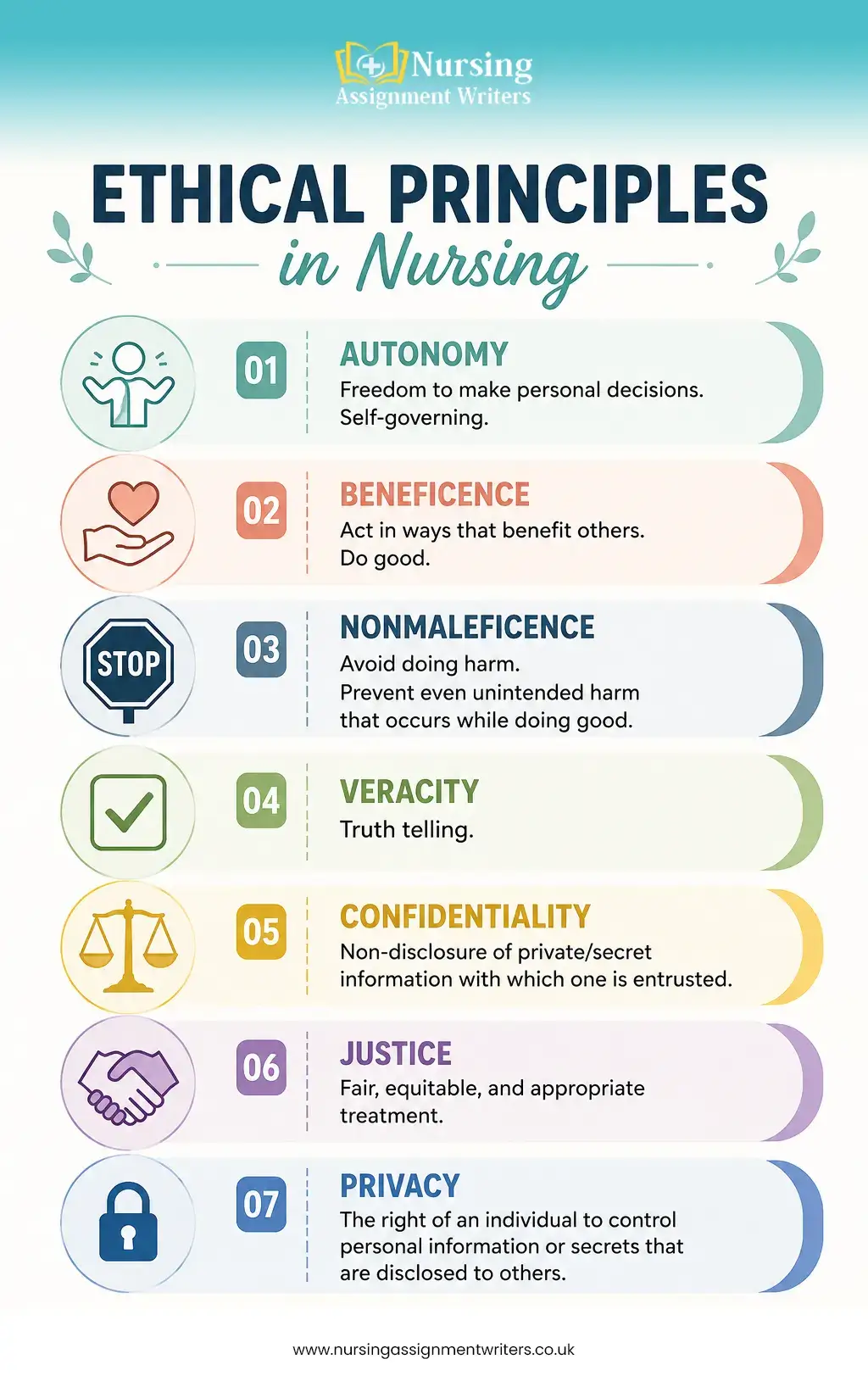
Ethical nursing practice serves as a basis for decision-making in a profession. These values are followed by nurses in tough situations.
1. Autonomy
Autonomy is the right of patients to make their own health care choices.
Nurses should:
- Discuss treatment options in a clear and understandable way
- Respect informed decisions
- Don’t impose personal beliefs
- Support patient independence
In the event that a patient has a choice that the nurse does not agree with, they should support the decision that has been made legally.
2. Beneficence
Beneficence relates to doing good for the patient in ethical nursing practice..
Examples include:
- Providing effective care
- Managing pain promptly
- Offering emotional support
- Promoting recovery
All nursing care actions must bring the best for the patient.
3. Non-Maleficence
The principle is “Do no harm.”
Nurses minimise harm in ethical nursing practice by:
- Following safety procedures
- Administering medications correctly
- Preventing infections
- Disclosing any errors in the medical record ASAP
One of the top concerns of nursing is patient safety.
4. Justice
Treatment is fair for all patients, regardless of:
- Race
- Religion
- Gender
- Financial status
- Disability
- Age
- Cultural background
Wherever possible, there should also be a fair distribution of healthcare resources.
5. Fidelity
Fidelity is the keeping of promises and the building of trust in ethical nursing practice.
Nurses exhibit fidelity by:
- Keeping promises, commitments and pledges.
- The patients’ best interests, honesty
- Protecting confidential information
- Maintaining professional relationships
6. Veracity
Veracity is defined as telling the truth.
Patients have a right to know:
- Diagnosis
- Treatment options
- Risks
- Expected outcomes
Trust is established when patients are honest with their healthcare provider.
Ethical Principles of Nursing in Everyday Practice
Knowing theory is just the beginning. Nursing ethical principles have to be used judiciously in actual situations.
Examples of everyday uses are:
Maintaining Privacy
The nurse should not talk to others in public places or share information with people who are not authorised to see this information.
Respecting Cultural Beliefs
Some patients might have different healthcare preferences. When possible, culturally sensitive care should be provided by nurses.
Managing End-of-Life Care
Nurses are frequently involved with patients and families in making difficult choices about life support or palliative care.
Compassion, respect and good communication are all essential elements of ethical practice.
Reporting Unsafe Practices
A nurse has ethical obligations to report unsafe behaviors observed by a nurse from another health care professional.
Professional Accountability of Nurses for Ethical Behaviour
Ethics in nursing practice contribute to the security of patients and health professionals.
Professional accountability includes:
- Following evidence-based guidelines
- Maintaining accurate documentation
- Continuing professional education
- Reporting clinical concerns
- Acting within the law.
Registered nurses are responsible for all clinical decisions they make.
Factors that Determine the Scope of a Nurse’s Practice
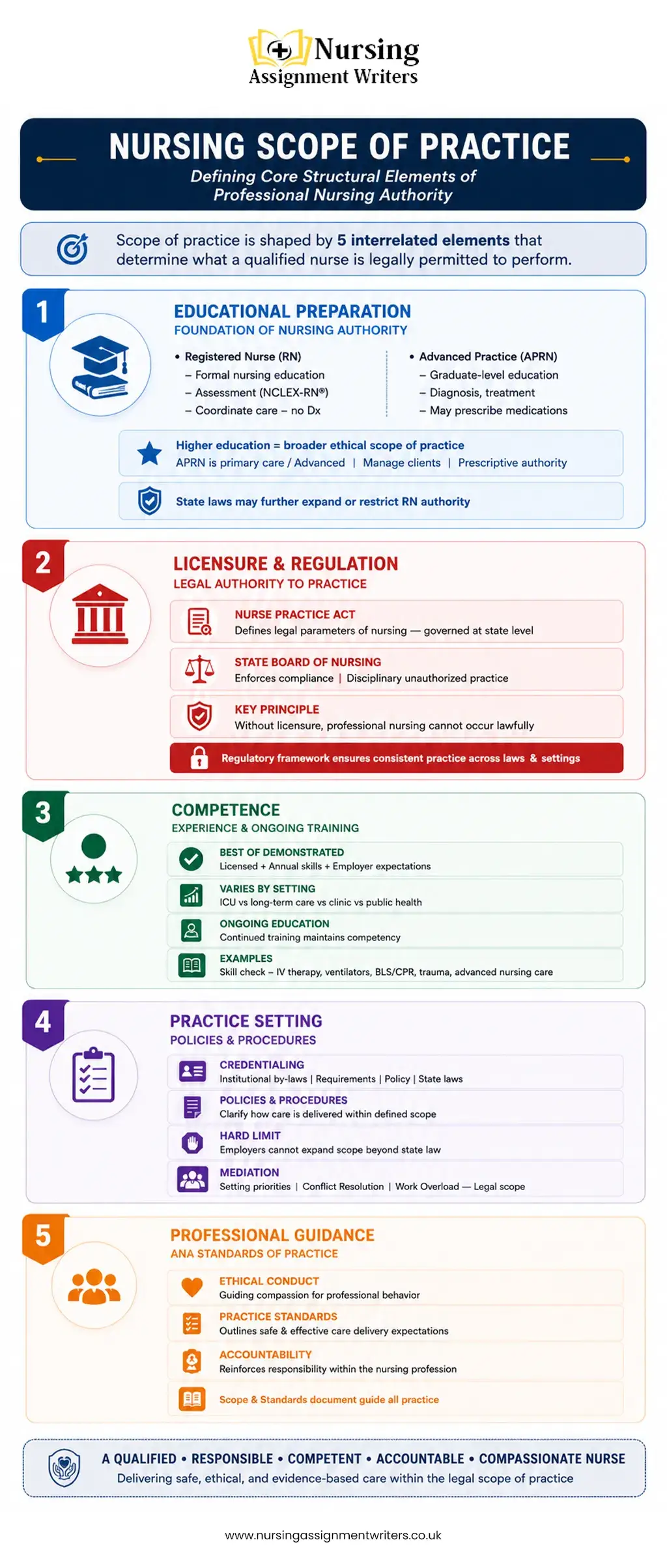
Scope of Nursing Practice is what registered nurses do, what they are responsible for and bound to do, and what they cannot do. Here are the factors that define ethical nursing practice:
Education
Formal nursing education is what is needed in order to achieve clinical competence.
Licensure
Nurses can only work independently if they have a valid professional license.
Clinical Competence
When a procedure is within the legal scope, nurses should only do it if they are trained and confident in their ability to do so.
Workplace Policies
There are other rules in some hospitals that outline the roles of various nursing jobs.
National Nursing Standards
Nursing standards are updated periodically by professional groups to keep up with developments in healthcare.
Ethical Implications in Nursing Within the Scope of Practice
Nurses are often required to make ethical decisions between what patients want, what they must do, and the law.
The ethical issues in nursing are:
Patient Refusal of Treatment
Patients can refuse to take medicines, have surgery, or accept life-saving care.
Nurses should:
- Respect patient autonomy
- Ensure informed decision-making
- Document discussions carefully
- Let the health care providers know
Confidentiality Challenges
Sensitive patient information is commonly shared among healthcare workers.
Ethics and law require that confidentiality be maintained.
Limited Healthcare Resources
In the event of an emergency, nurses may have to make challenging choices about the prioritisation of patient care.
Ethical decision-making is used to safeguard fairness in times of scarcity.
Family Disagreements
Family members frequently don’t agree with patients’ choices.
In these cases, nurses represent the rights of competent patients and communicate with compassion.
Common Ethical Dilemmas Registered Nurses Face
Ethical issues arise in all health care environments.
The most common of them are:
End-of-Life Decisions
Coping with comfort care and aggressive treatment can be difficult emotionally.
Informed Consent
All procedures should be fully explained to the patient before consenting to treatment.
Nurses frequently explain and check for understanding.
Medication Errors
Errors may occur even when doing the work carefully.
Ethical nurses admit mistakes openly, focus on patient safety, and engage in QI.
Social Media Use
Patient information, even if inadvertently, shared online is in violation of confidentiality standards.
Workplace Staffing Issues
A lack of staffing can have an impact on patient safety.
Ethical nurses do not simply overlook unsafe conditions but report them via the proper system.
Ethical Decision-Making Models for Nurses
Nurses are likely to use a formal decision-making process in challenging contexts.
A common strategy is to:
Step 1: Identify the Ethical Issue
Determine exactly what moral conflict exists.
Step 2: Gather Information
Gather clinical data, patient preferences, legal considerations and organisational policies.
Step 3: Consider Ethical Principles
Read and discuss autonomy, beneficence, non-maleficence, justice, fidelity and veracity.
Step 4: Assess Options for Action
Think about the pros and cons of each choice and what it involves.
Step 5: Take the Best Action
Select the action which best safeguards the welfare of patients in accordance with professional standards.
Step 6: Reflect on the Outcome
Consider how to make improvement in future scenarios.
Reflective practice is a part of professional learning. There are many methods of evaluating decisions and opportunities for improvement after clinical experiences, many of which encourage students to reflect on their experiences, including the Gibbs Reflective Cycle.
Technology and Ethics in Modern Nursing
Technology has revolutionised healthcare by enhancing communication, documentation and patient monitoring. Healthcare is more efficient than ever before, thanks to electronic health records, telehealth services, wearable devices and artificial intelligence. It might have some effect on mental health, but new ethical issues arise with these innovations, too.
The following are some common ethical issues:
Protecting Patient Data
EMRs contain very sensitive information. Nurses have a duty to ensure that patient information is only given to those authorised to have access to it and not shared with anyone without consent.
Artificial Intelligence in Healthcare
AI can help nurses detect patterns in health, forecast patient risks, and aid in making clinical decisions. But technology can’t take the place of professional judgment. Nurses are still required to assess recommendations prior to implementing it with patients.
Telehealth Services
Virtual healthcare has expanded access to health care services, particularly for those in rural areas. When delivering telehealth, nurses should ensure that patients’ privacy is maintained, their identities are confirmed, and informed consent is obtained.
Digital Communication
Secure digital communications are used by healthcare professionals. Ethical practice dictates that discussions about patients be held via approved communications platforms and not personal communication apps.
Technology should be used to support care for patients, not decrease the personal touch of nursing.
The Importance of Reflection in Ethical Nursing
Reflection plays an essential part in ethical nursing.
Through reflection, nurses are able to learn from their experiences and enhance their practice for the next time. A difficult clinical situation can be followed up with reflection on decisions, thus uncovering strengths and weaknesses.
The Driscoll Model of Reflection is one approach that prompts healthcare professionals to ask themselves three basic questions:
- What happened?
- What did I find out?
- What can I do differently next time?
This orderly process allows nurses to continually enhance clinical judgment and ethical decision-making.
Reflection isn’t about telling ourselves that we’re wrong – it’s about learning from experience to be a better healthcare worker.
Need Support for your Nursing Reflection Essays?
Congratulations! You just landed on the right site. We are offering flawless Gibbs Reflection Assignment Writing Services to help you hit the perfect score!

Best Practices for Maintaining Ethical Standards
Ethical nursing is a continuous process, and not a goal that is merely reached. There are a number of habits that can help strengthen nurses’ ethical practice.
Keep up to date with professional guidelines
Check nursing regulations and organisational policies on a regular basis to keep your practice up-to-date.
Communicate Clearly
Patients can make informed health care decisions, and misunderstandings are minimised through the use of honest and respectful communication.
Document Accurately
Completing and timely documentation safeguards both patients and healthcare professionals.
Seek Guidance When Needed
Never take a complex ethical situation into your own hands. Seeking advice from colleagues, supervisors and ethics committees can be helpful.
Respect Patient Rights
Doctors must treat everyone with dignity and privacy, listen and involve them in decisions about their care, and show kindness and compassion, no matter who they are or what they believe.
Practice Self-Awareness
An awareness of one’s values and possible biases enables nurses to make unbiased decisions that are focused on the care of patients.
Conclusion
To deliver safe, compassionate and patient-centred care, it will take much more than clinical skill. In all interactions with patients, registered nurses are required to balance the roles of professional, legal and moral responsibilities. Knowing the ethical principles, being respectful of professional boundaries, safeguarding patient rights and working within the scope of the nursing profession all play a role in delivering quality healthcare.
Ethical decision-making will be one of the most valuable skills that a nurse can have as health care continues to develop with new technology and increasingly complex patient needs. Through a commitment to lifelong learning, reflective practice, cultural competence and professional accountability, nurses can continue to provide outstanding care and maintain the highest level of ethical nursing practice.
Frequently Asked Questions
1. What does it mean to be an ethical nurse?
Ethical nursing practice is the use of nursing values, moral principles and nursing standards in the care of the patient. This includes respecting patient rights, keeping patient information confidential, ensuring the safety of patients, and making decisions with the patient’s best interests at heart.
2. Why is it that ethical issues play an important role in nursing?
Nurses make good, acceptable and professional choices based on ethical principles in Nursing. They help to safeguard patients, build trust and provide high-quality healthcare.
3. What are the principles of ethics in nursing?
The six principles are autonomy, beneficence, non-maleficence, justice, fidelity and veracity. These six, when combined, lay the foundation for ethical decision-making in nursing practice.
4. What is the scope of nursing practice?
The scope of nursing practice establishes the roles, responsibilities and legal limits that registered nurses are trained, licensed, and qualified to care for.
5. What are the ways that nurses deal with ethical issues?
Nurses evaluate the situation, collect pertinent data, discuss the ethical issues involved, if needed, seek input from others or ethics committees and decide on the best course of action for the patient’s welfare.
6. What is the ethic behind being a patient advocate?
Patient advocacy helps patients be informed about available treatment options, have their voice heard and be cared for in a way that respects their rights, preferences, and dignity.
7. How can confidentiality help with good nursing ethics?
Secure patient confidentiality, maintaining patient privacy, and adhering to professional and legal standards foster trust and respect for patient privacy.
8. Is there potential for ethics issues with technology in nursing?
Yes. With the advent of electronic health records, telehealth, artificial intelligence, and digital communication, nurses must responsibly and appropriately protect patient privacy in their use of technology.
9. Why is reflective practice important for registered nurses?
Reflective practice can be used to analyse clinical experiences, enhance decision-making, foster critical thinking and facilitate ongoing development of nursing practice.
10. What are the ways for nurses to uphold high ethical standards in their career?
Ethical standards can be upheld through professional practice, ongoing learning, patient-centred communication, privacy guidelines, professional support and supervision, and working within one’s scope of practice.