 By
By Introduction:
The healthcare sector is dipping its toes into a new digital world, where intelligent technologies are changing the way clinical decisions are made, patients’ information is handled, and care is delivered.
AI has emerged as a major driver of this change in the healthcare sector, transforming nursing and assisting health workers in making safer and more effective decisions. The core of this change lies in the use of artificial intelligence in nursing, which is a rapidly growing area that combines machine learning, natural language processing (NLP), predictive analytics, computer vision and automation to help healthcare professionals make safer and more efficient decisions for patients.
The challenges healthcare providers are facing across the UK are unprecedented. What is putting immense pressure on nursing teams today is the ageing population, growing numbers of people with chronic conditions, worker shortages, a growing administrative burden and financial pressures. Nurses should deliver patient-centred, high-quality care; manage a high volume of documentation; coordinate multi-disciplinary teams; and react quickly to patient changes.
AI is proving to be one of the most viable answers to these problems. The aim of AI is not to replace nurses, but to complement their clinical skills by analysing vast amounts of healthcare data, uncovering hidden trends, streamlining time-consuming administrative duties, and offering data-driven insights that can help healthcare professionals make informed choices.
So, in this blog, we will shed light on Artificial Intelligence in Nursing from all aspects.
Role of Artificial Intelligence in Nursing
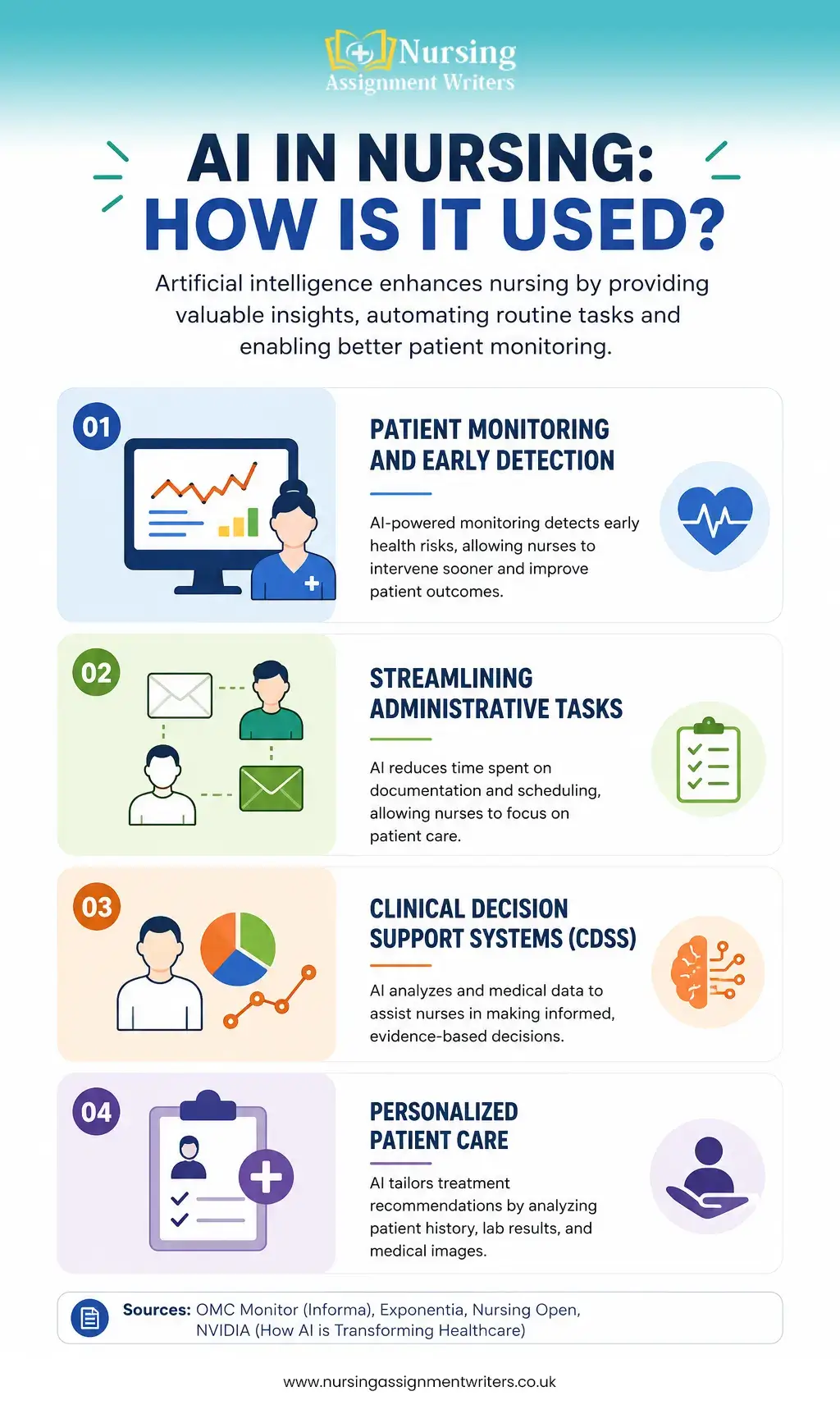
AI is no longer seen as “a new technology”. It has emerged as a critical part of digital healthcare initiatives and has been adopted by nurses throughout the length of the patient journey, from admission and assessment to treatment, discharge planning, and aftercare.
It is best to think of artificial intelligence in nursing as an intelligent nurse assistant. Instead of making decisions on their own, AI examines intricate data at a pace impossible for humans, helping nurses make well-informed and timely decisions.
The Application of Clinical Decision Support Systems
Clinical Decision Support Systems (CDSS) are one of the more mature AI applications. These platforms integrate patient information and evidence-based guidelines, helping nurses recognise potential clinical issues and prioritise actions.
For instance, AI-powered CDSS can:
- Be able to anticipate signs of sepsis before they are evident.
- Identify deviations from normal laboratory patterns that are of immediate concern.
- Determine patients who are at high risk for falls or pressure injuries.
- Notify health professionals of possible drug interactions.
- Advise on evidence-based care pathways
Importantly, Artificial Intelligence in Nursing do not replace, but will support, professional judgement.
The Integration of Electronic Health Records
One of the most tedious tasks of nursing practice is documentation. AI is playing a role in alleviating this burden by intelligently integrating with Electronic Health Records (EHRs).
Today’s AI-powered EHR platforms can:
- Suggest appropriate nursing documentation.
- Fill out repeating fields with data automatically.
- Point out any clinical details that are missing.
- Summarise patient’s history in a structured way.
- Enhance the consistency of documentation by multi-disciplinary teams.
Hence, nurses will have more time to focus on providing care and therapeutic communication to patients instead of administrative duties.
Predictive Analytics
The traditional healthcare system tends to react when there are complications. Predictive analytics will allow for a more proactive measure, identifying patients at risk prior to clinical deterioration.
Machine learning algorithms automatically process and study the following variables:
- Vital signs
- Laboratory results
- Medication history
- Comorbidities
- Previous admissions
- Nursing observations
The system produces risk scores which enable clinicians to prioritise interventions and allocate resources in an effective way.
Workflow Optimisation
The benefits of AI extend beyond bedside care, enhancing operational efficiency. Intelligent algorithms are increasingly being used in hospitals to support:
- Nurse rostering
- Bed management
- Patient flow
- Theatre scheduling
- Resource allocation
These enhancements can minimize delays, streamline staffing, and help ensure smoother clinical operations.
AI Impact on Nurses
AI in healthcare is transforming the role of the nurse and the abilities they need to thrive in a digital age. Though worries of job displacement frequently dominate the public discourse, existing research indicates that the AI Impact on nurses is more about augmenting jobs than replacing them.
Rather than taking the place of nursing, AI is lessening administrative tasks – which are a major cause of burnout – while also facilitating safer, more efficient clinical work.
Reducing Administrative Burden
A significant amount of documentation takes place with each shift worked by a nurse. Documenting evaluations, revisions to care plans, discharge summaries, and ensuring timely and accurate EHRs are critical but time-consuming activities.
Using AI-driven automation, a lot of these tasks can be automated, such as:
- Creating clinical note outlines.
- Organising patient records.
- Obtaining pertinent clinical data.
- Producing discharge documentation.
- Creating organized shift reports.
This means that nurses can focus more on patient care and less on repetitive paperwork tasks.
Supporting Better Clinical Decisions
In today’s healthcare environment, significant amounts of patient data are collected daily. AI can quickly process this data, detect trends, and provide actionable, clinically relevant information that aids in evidence-based nursing care.
Nurses are not only given prompt alerts but also are alerted to the following:
- Patient deterioration.
- Medication safety concerns.
- Abnormal laboratory values.
- Potential complications.
- Changes in clinical risk.
This extra step of decision support boosts clinical confidence and patient safety.
Helping Address Burnout
Burnout is a persistent concern in the healthcare sector across the globe.
As per a survey, around 53 to 62% of nurses experience burnout. Physical and psychological fatigue can be caused by workload, shortage of staff, emotional demands and administrative complexity.
AI frees up time for nurses to attend to more meaningful administrative tasks, including patient assessment, education, advocacy, and working with other disciplines.
While technology can’t solve the problems in the workplace, it can help lessen the excess administrative burden that can lead to burnout at work.
Expanding Professional Competencies
Along with the clinical skills, nurses will need new skills in a digitalized healthcare world.
Nursing practice in the future will have more focus on:
- Digital health literacy
- Health informatics
- AI-assisted clinical decision-making
- Data interpretation
- Cybersecurity awareness
- Technology governance
These skills are crucial to the nurse’s professional development and will be used throughout their career.
How Will AI Affect Nursing
The issue is not if, but how, AI will impact nursing. It is more important to ask about the impact of Artificial Intelligence in Nursing in the next 10 years, in the face of digital transformation in healthcare systems.
Artificial Intelligence is not expected to alter the underlying role of nursing, rather, it is anticipated to transform how care is provided, recorded and coordinated.
A Shift Towards Predictive Care
Most conventional models are based on the recognition of deterioration once it is clinically apparent. AI can help with a more proactive strategy: fine lines that could signal issues down the road.
This allows earlier interventions, minimising preventable hospital admission and the outcomes of these admissions.
Giving more time to direct patient care
There has been a long tradition of nurses’ time becoming occupied with administrative tasks, rather than direct patient care.
The use of technologies like ambient AI documentation, voice recognition and automated record generation will likely save lots of time spent on paperwork, giving registered nurses the opportunity to focus on communication, education and compassionate care.
Greater Integration of Virtual Care
Telehealth and remote monitoring are continuing to grow, and will allow nurses to care for patients in a way that is beyond the hospital walls.
Wearable technology and home monitoring systems will generate real-time clinical information, enabling earlier management interventions for people with chronic conditions, and a more individualised approach to care.
Human-AI Collaboration
The transformation of collaborative clinical practice will probably be the most significant change.
A balanced partnership will be necessary for future healthcare in which:
- AI quickly processes intricate healthcare information.
- Nurses exercise professional judgement.
- Individual experiences and preferences are added by patients.
- A multidisciplinary team to coordinate comprehensive care.
This human approach recognizes that technology is designed to supplement clinical practice and maintain the elements of nursing that are so important to clinical work: empathy, ethical considerations, and a caring communication style. This is why psychology is essential in nursing.
Examples of Artificial Intelligence in Nursing
In today’s healthcare landscape, AI is already widely used in various applications. Some applications run in the background; others actively aid nurses when assessing patients, documenting patient care, administering medications and progressing monitoring.
The following are a few of the more important applications which are making an impact in nursing practice today.
Predictive Analytics for Early Intervention
One of the most beneficial uses of AI in the healthcare industry is predictive analytics. Machine learning models could detect patients who are at higher risk of deteriorating, even prior to signs of clinical deterioration, and alert providers based on thousands of data points from the patient, such as vital signs, lab results, past medication use, and past hospital stays.
These predictive insights help to provide earlier interventions and is a great benefit of Artificial Intelligence in Nursing.
Clinical Decision Support Systems
Clinical Decision Support Systems (CDSS) use patient information and evidence-based clinical pathways to assist with clinical judgment.
Ambient AI Documentation
A lot of time is still being spent on documentation each shift. To overcome this, a number of health systems are taking up one of the biggest advancements in clinical documentation, ambient AI scribes.
Ambient AI technology is designed to capture conversations in patient interactions, using speech recognition and natural language processing. It can automatically produce draft clinical notes, which are connected to Electronic Health Records (EHRs), saving time for manual typing.
Clinical Governance Reminder
While ambient AI boosts efficiency, every piece of AI-generated documentation needs to be manually reviewed prior to being included in the patient’s permanent health record. Nurses are still professionally responsible for checking for accuracy, identifying omissions and signing off the final record.
Smart Patient Monitoring
Unlike standard monitoring systems, AI-driven platforms constantly analyse patient data, rather than doing so sporadically.
The continuous monitoring allows the nurse to intervene earlier, and can help to manage patients proactively.
Medication Safety
Patient safety is a significant problem with medication error. AI can help by reviewing the prescription history, allergy information, and lab results to alert the nurse to potential complications before the medicine is given.
Computer Vision for Wound Care
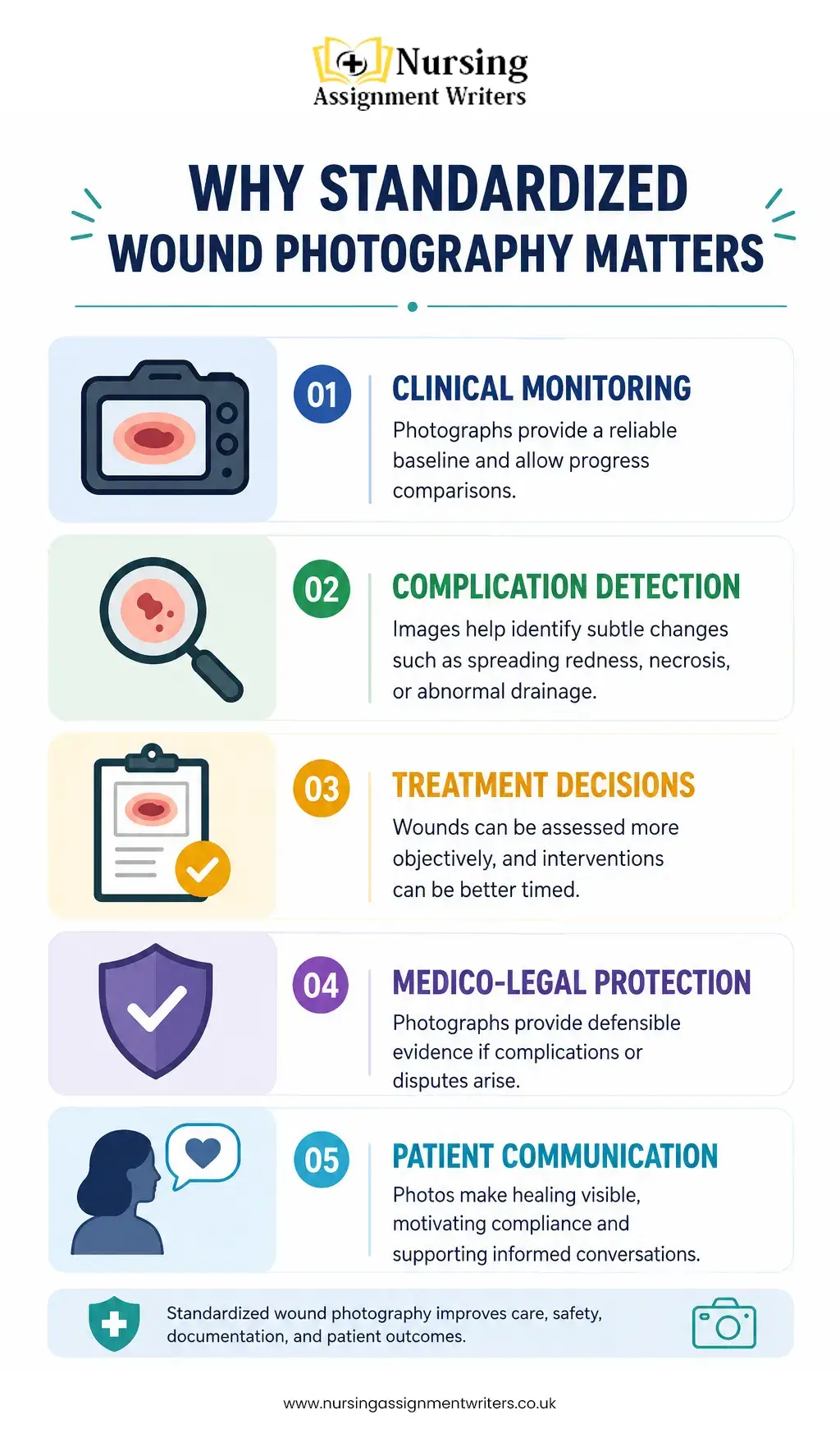
Assessment of wounds is increasingly made using computer vision technology in an objective manner.
AI can provide estimates from digital images by analysing them:
- Wound dimensions
- Tissue viability
- Healing progression
- Signs of infection
- Changes in the characteristics of wounds over time
Objective image analysis helps to document care in a more consistent way and supports nurses in tracking the effectiveness of care.
AI Virtual Nursing
AI virtual nursing is one of the fastest-growing trends in digital health care. Virtual nursing is not a substitute for bedside nurses, but rather uses intelligent communication technology and remote monitoring to provide clinical support that goes beyond the hospital setting.
Supporting Remote Patient Care
Virtual nurses with AI capabilities enable healthcare professionals to keep track of patients even after they leave the hospital or when they are dealing with chronic diseases at home.
The distance-outfitted surveillance devices gather real-time data including:
- Blood pressure
- Blood glucose levels
- Heart rate
- Oxygen saturation
- Activity levels
The algorithms will continuously analyze these data and notify all healthcare teams about worrying patterns.
This will help to implement earlier intervention efforts and help to minimize unnecessary hospitalization.
Ambient AI Scribes in Virtual Nursing
Ambient AI systems can listen to relevant conversations during video visits or when you are at the bedside and provide structured notes that can be incorporated seamlessly into the patient’s EHR.
These systems, however, are intended to support clinicians and do not take the place of professional accountability.
AI Chatbots and Patient Engagement
AI-powered virtual assistants are becoming a more common way for healthcare organisations to respond to common patient inquiries outside of clinical visits.
Such systems can offer advice on:
- Appointment preparation
- Medication schedules
- Post-discharge instructions
- Lifestyle recommendations
- Frequently asked questions
Any complex clinical issues are automatically taken up with qualified health care professionals to ensure that patients receive appropriate clinical advice if required.
Virtual Care Coordination
AI also aids in interdisciplinary communication, such as setting up follow-up appointments, tracking referrals, and identifying individuals who need further intervention.
Applications of Artificial Intelligence in Nursing Care – A Systematic Review
There are promising indications about the increasing use of artificial intelligence in nursing practice in recent systematic reviews of the field. This is not a case study of an individual technology, but rather a synthesis of the results of different studies that have been carried out in different hospitals, community health care settings and specialist care settings.
There are some common patterns in the available evidence.
Improved Clinical Decision-Making
Recent systematic analyses have shown that they can enhance the ability to identify high risk patients by analysing complex clinical data more quickly and efficiently than traditional methods.
Researchers say that there are improvements in:
- Risk prediction
- Early warning systems
- Clinical prioritisation
- Decision support accuracy
Reduced Administrative Burden
AI also offers the highest operational value in areas of documentation, highlighted by systematic reviews.
AI-assisted documentation has been associated with:
- Reduced charting time
- Improved record consistency
- Improved EHR integration.
- More time for direct patient care activities.
These efficiencies help to improve workflow without sacrificing documentation standards, as long as clinicians are doing the right validations.
Enhanced Patient Safety
In several healthcare contexts, AI has shown promise to enhance patient safety by:
- Better recognition of the deterioration in advance
- Medication error prevention
- Continuous monitoring
- More accurate risk stratification
- Improved care coordination
While there are some variations across different studies, the overall findings indicate that AI has the potential to positively impact patient outcomes in the context of strong clinical governance.
Limitations Identified by Current Evidence
Systematic reviews can establish significant limitations even though they make promising findings.
Common concerns include:
- There is a lack of external validation of AI models.
- A wide range of differences in the quality of the data sets.
- Algorithmic bias
- Interoperability challenges
- Regulatory uncertainty
- Few long term outcome data available
Researchers thus suggest a need to continue evaluating and implement responsibly.
Artificial Intelligence in Nursing and Midwifery: A Systematic Review
Recent systematic reviews of recent literature indicate that AI is assisting care in a variety of clinical subjects, such as acute care, maternity services, community health and long-term care.
AI is not just for a single discipline, but rather, it’s being used across the entire patient journey.
Maternal and Neonatal Care
Machine learning models are assisting maternity teams to determine those pregnancies that are at a higher risk of complications by analyzing maternal health records and clinical observations.
Predicting is currently used in the following applications:
- Gestational diabetes
- Pre-eclampsia
- Preterm birth
- Fetal distress
- Neonatal complications
Earlier detection allows for more monitoring and timely interventions by the nurse/midwives.
Community and Long-Term Care
In addition to the growing use of AI in hospitals, systematic reviews underscore its broader applications in other settings.
Applications include:
- Remote chronic disease monitoring
- Fall prediction
- Medication adherence monitoring
- Home-based rehabilitation support
- Cognitive decline assessment
These technologies will enhance continuity of care and help ageing populations as well as avoid unnecessary hospitalizations.
Artificial Intelligence in Nursing Education
Healthcare is becoming increasingly digital – universities and training institutions need to ensure that nurses can be confident in the use of intelligent technologies. The use of AI in nursing education is changing the way students learn, practise their clinical skills, and showcase their competence before entering real clinical settings.
Often, traditional nursing education involves a standard curriculum which is taught at a uniform rate to all students. AI disrupts this approach by developing personalized learning paths and adapting to each student’s strengths, weaknesses, and learning styles. Educational platforms leverage machine learning to assess quiz results, simulation performance, study patterns, and gaps to tailor learning activities to individual students.
For instance, a student who is having trouble with pharmacology can be given extra case studies and revision materials, and interactive quizzes, while one who did well in that area can be given more advanced clinical situations.
Worried About Failing Your Nursing Assignments?
Nursing Assignment Writers UK is a one-stop solution designed exclusively for nursing students. They are providing hands-on experience and personalized writing services to help you ace your assignments every single time!

AI Nursing Education: Personalised and Data-Driven Learning
These platforms for modern AI nursing education feature:
- Progressive quizzes and assessments
- AI-powered tutoring systems
- Personalised revision plans
- Clinical competency tracking
- Learning analytics dashboards
- Automated marking of assignments.
Students catch areas for improvement early and receive feedback that facilitates the retention of knowledge with ongoing data to support their learning.
Virtual Reality and Intelligent Clinical Simulations
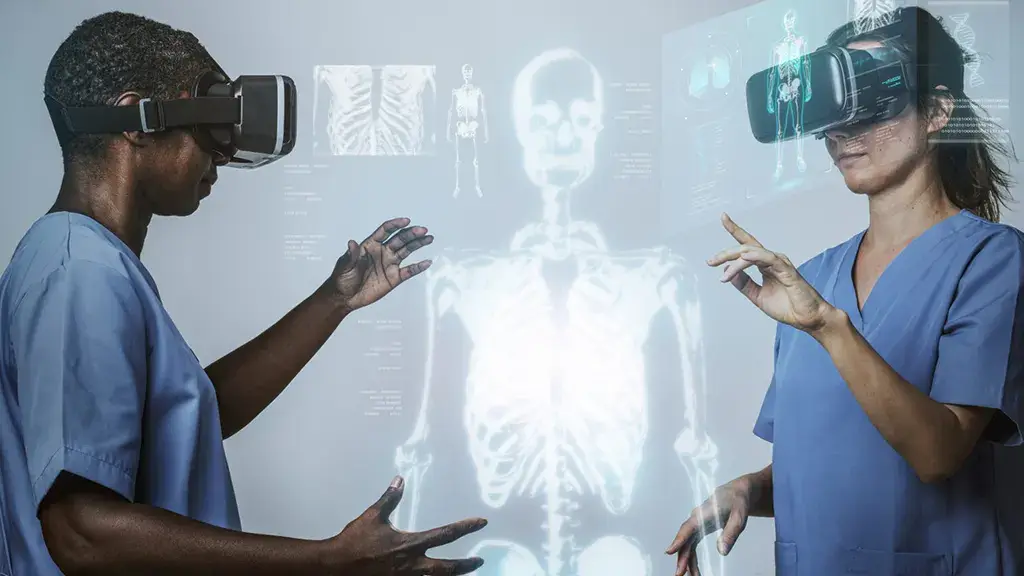
The application of virtual reality (VR) clinical simulations is one of the biggest breakthroughs in nursing education that has been introduced by AI. Students are not only taught in the classroom, but also have the opportunity to practise in virtual wards that simulate real patients, which are animated by AI.
Pupils are able to safely practise:
- Emergency response
- Medication administration
- Wound care
- Mental health communication
- Maternity care
- Critical care decision-making
When a learner takes a long time to seek treatment or takes the wrong clinical decision, the virtual patient’s condition reflects the delay or wrong choice without posing a threat to patient safety.
Automated Assessment and Faculty Support
AI is making teaching more efficient, as well. Intelligent systems can assist with:
- Marking objective assessments
- Analysing simulation performance
- Tracking clinical competencies
- Identifying pupils who require extra help
- Generating personalised progress reports
This frees up more time for faculty to devote to mentoring students, and less time to repetitive administrative work. It supports Artificial Intelligence in Nursing Research as well.
Artificial Intelligence in Nursing Education Strengths and Weaknesses
Strengths
- Individualized learning: Each student gets customized learning based on his or her performance.
- Hyper realistic simulations: AI-generated VR scenarios enhances clinical thinking and confidence.
- Immediate feedback: students get immediate feedback and gain understanding of progress.
- Less faculty workload: automated grading and analytics free teachers to mentoring and research.
Weaknesses
- Possible AI plagiarism: Students may be too dependent on generative AI for assignments.
- Issues related to data privacy: Educational platforms have extensive amounts of student data.
- Lack of emotional intelligence: AI has not been able to fully grasp the emotional and psychological components of learning.
- Technology dependency: Students need to have independent clinical judgment.
Artificial Intelligence in Nursing Education Opportunities and Challenges
Opportunities
- Solve the problem of nurse shortage spreading throughout the world.
- Increase access for remotely located and underserved communities.
- Improve faculty productivity.
- Promote lifelong professional learning.
Challenges
- Limited digital and AI literacy to some teachers.
- Initial implementation cost.
- Academic integrity and good governance policy needs.
- Ongoing cybersecurity requirements.
The Ethical Use of Artificial Intelligence in Nursing Practice
As AI becomes more prevalent in healthcare, there are important ethical considerations to be taken into account. Ethical use of AI in nursing practice involves a careful consideration of innovation and patient safety, transparency, and professional responsibility.
Ensuring Data Privacy and Confidentiality
AI systems are based on vast amounts of patient data. To ensure the secure storage and access of data, healthcare organisations need to adhere to the GDPR, Data Protection Act 2018, and NHS information governance standards.
Algorithmic Bias
Machine learning models are trained on past data. AI recommendations could inadvertently impact specific patient populations if that data is biased. Scheduling of regular audits is critical to achieve equity based on age, ethnicity, gender, and disability and socioeconomic status.
AI Hallucinations in Clinics
In some cases, Generative AI might generate factual errors or even make things up, which is referred to as an AI hallucination. For example, in the healthcare sector, it could be a wrong prescription or a lack of patient information. So, AI outputs should always be considered draft suggestions that need to be checked by humans.
Preserving the Human Touch
Although AI can process data, it cannot be a substitute for empathy, compassion, cultural sensitivity and therapeutic communication. Nursing values are the core of the nursing profession and are vital in establishing trust with patients and families.
Final Words
AI is transforming the field of nursing, impacting clinical decision support, documentation workflows, education, and research. These solutions help healthcare providers deliver more effective and evidence based care, from predictive analytics to ambient AI documentation, virtual simulations, and advanced data analysis.
But the future of nursing is not about technology only. Balancing the capabilities of AI with the critical role of the nursing professional judgment and ethical decision making, along with their ability to communicate with compassion and empathy, is essential for success.
Frequently Asked Questions
1. What is artificial intelligence in nursing?
In the nursing context, artificial intelligence involves the application of technologies like machine learning, natural language processing (NLP), and predictive analytics to assist healthcare providers in clinical decision making, patient monitoring, documentation, and streamlining workflows.
2. Will AI replace nurses in the future?
No, AI is just meant to help nurses, and not replace them. The need for professional judgement, empathy, communication and patient advocacy skills will still be required for professional nursing practitioners.
3. In what ways is AI contributing to patient safety?
AI can enhance patient safety by detecting clinical deterioration at an early stage, aiding medication safety, real time analysis of patient data and making evidence based recommendations that enable nurses to intervene earlier.
4. What is ambient AI documentation?
Ambient AI documentation refers to the use of AI technologies such as speech recognition and natural language processing to automate the creation of clinical notes during patient interactions.
5. What are some examples of using Artificial Intelligence in nursing education?
AI is used in personalised learning, adaptive assessment, virtual reality simulations, automated feedback and competency tracking, making nursing students prepared for a digitally driven healthcare future.
6. What are the most significant ethical issues related to AI in healthcare for nurses?
Patient privacy, algorithmic bias, the risk of AI hallucinations, cybersecurity, transparency, and retaining accountability of nurses for clinical decisions are top concerns.
7. What are the benefits of Artificial Intelligence in nursing research?
AI assists researchers by analysing large datasets, screening literature, identifying healthcare trends, supporting predictive modelling, and accelerating evidence synthesis for evidence based nursing practice.
8. What skills should future nurses develop for AI healthcare?
AI helps researchers to analyze vast amounts of data, screen literature, identify healthcare trends, aid in predictive modelling, and expedite evidence synthesis for evidence informed nursing practice.